
Description
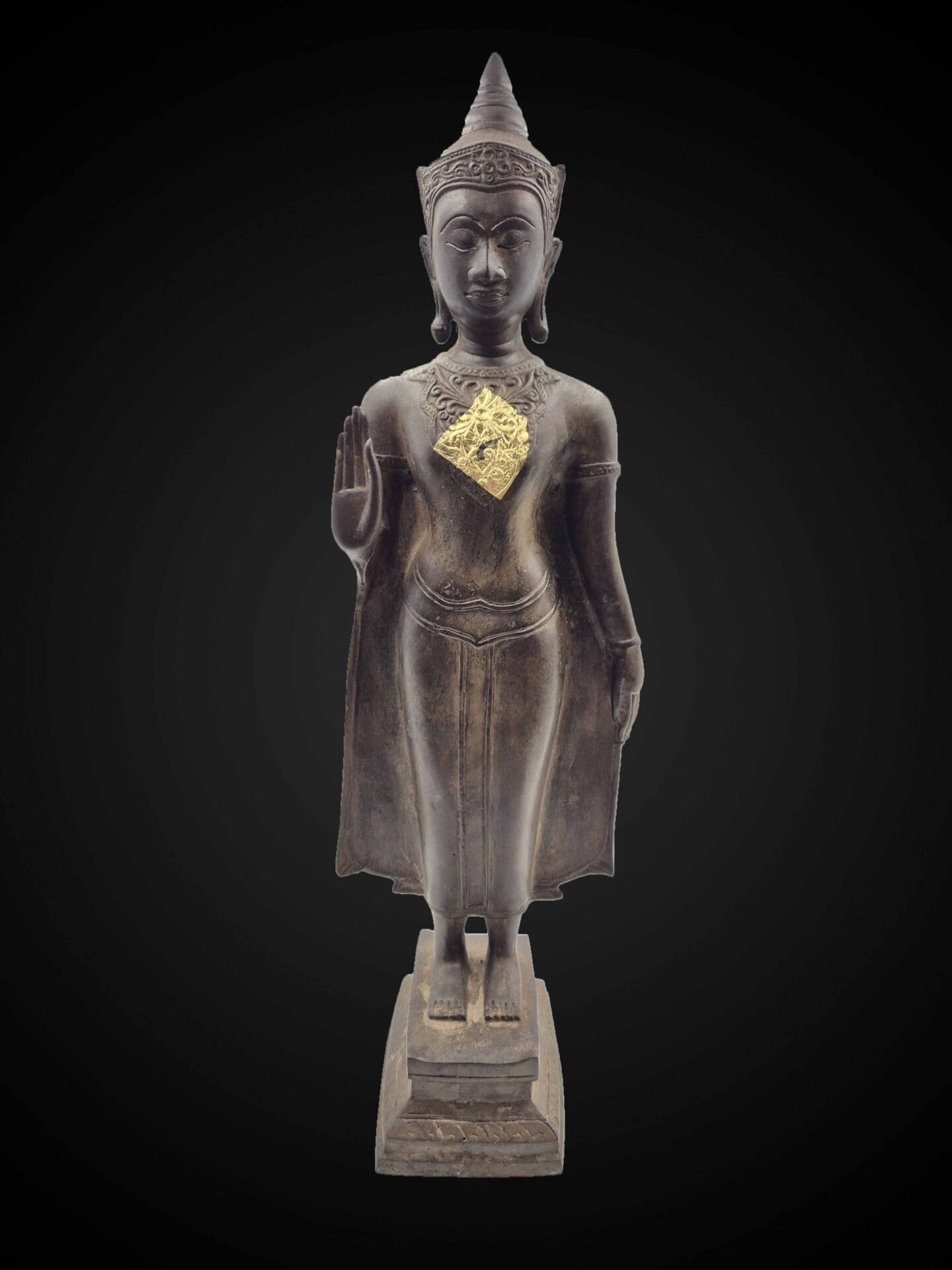
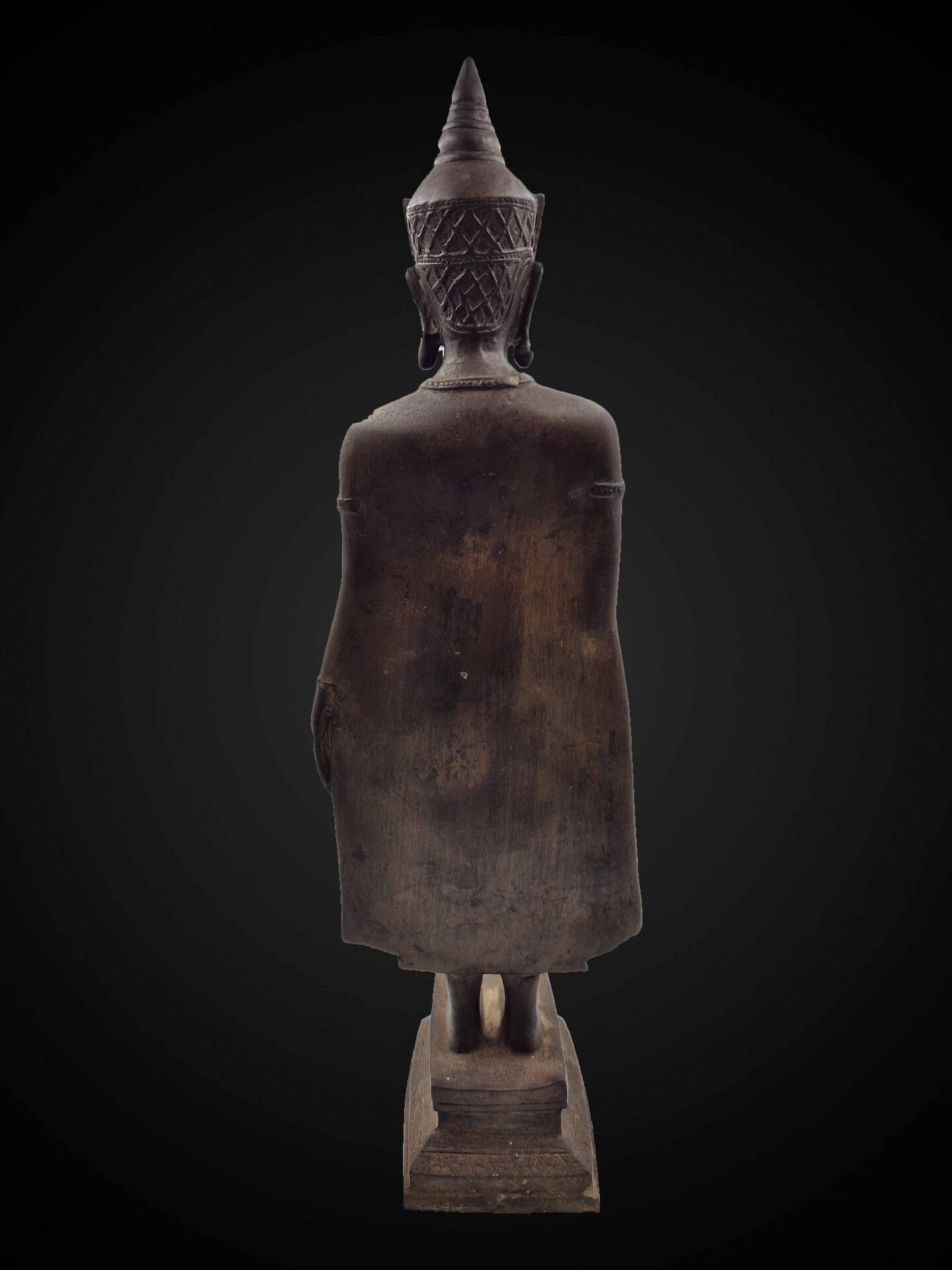
This standing Buddha statue displays a graceful blend of Northern Thai Lanna and Shan stylistic influence, reflecting the shared artistic traditions found across the Tai Buddhist regions of Northern Thailand and Myanmar.
The Buddha is depicted in the Abhaya Mudra posture, with the right hand raised in a gesture of reassurance, peace, and protection. This symbolic gesture represents fearlessness and compassionate blessing, making it one of the most revered standing Buddha forms in Southeast Asian Buddhist art.
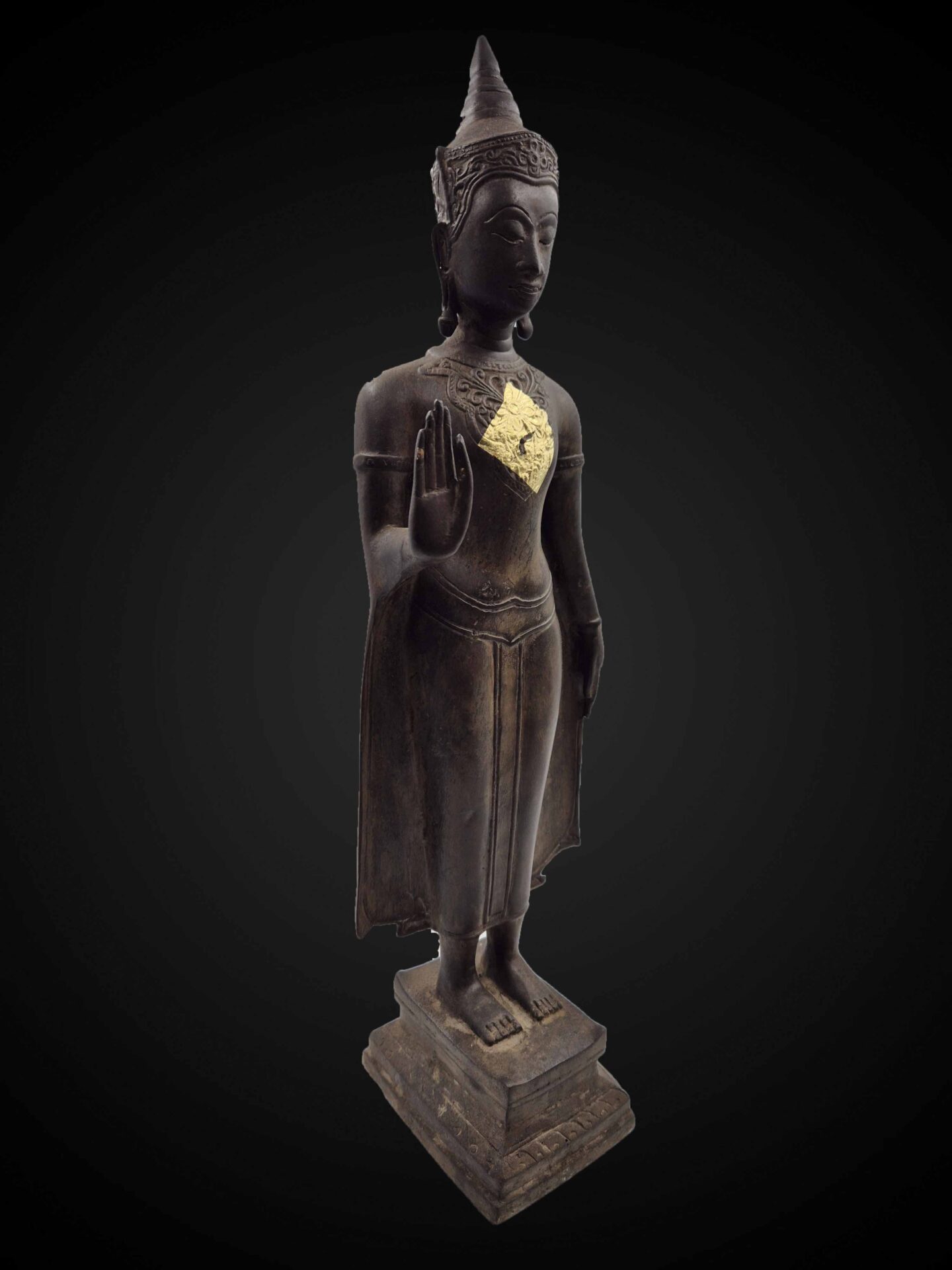
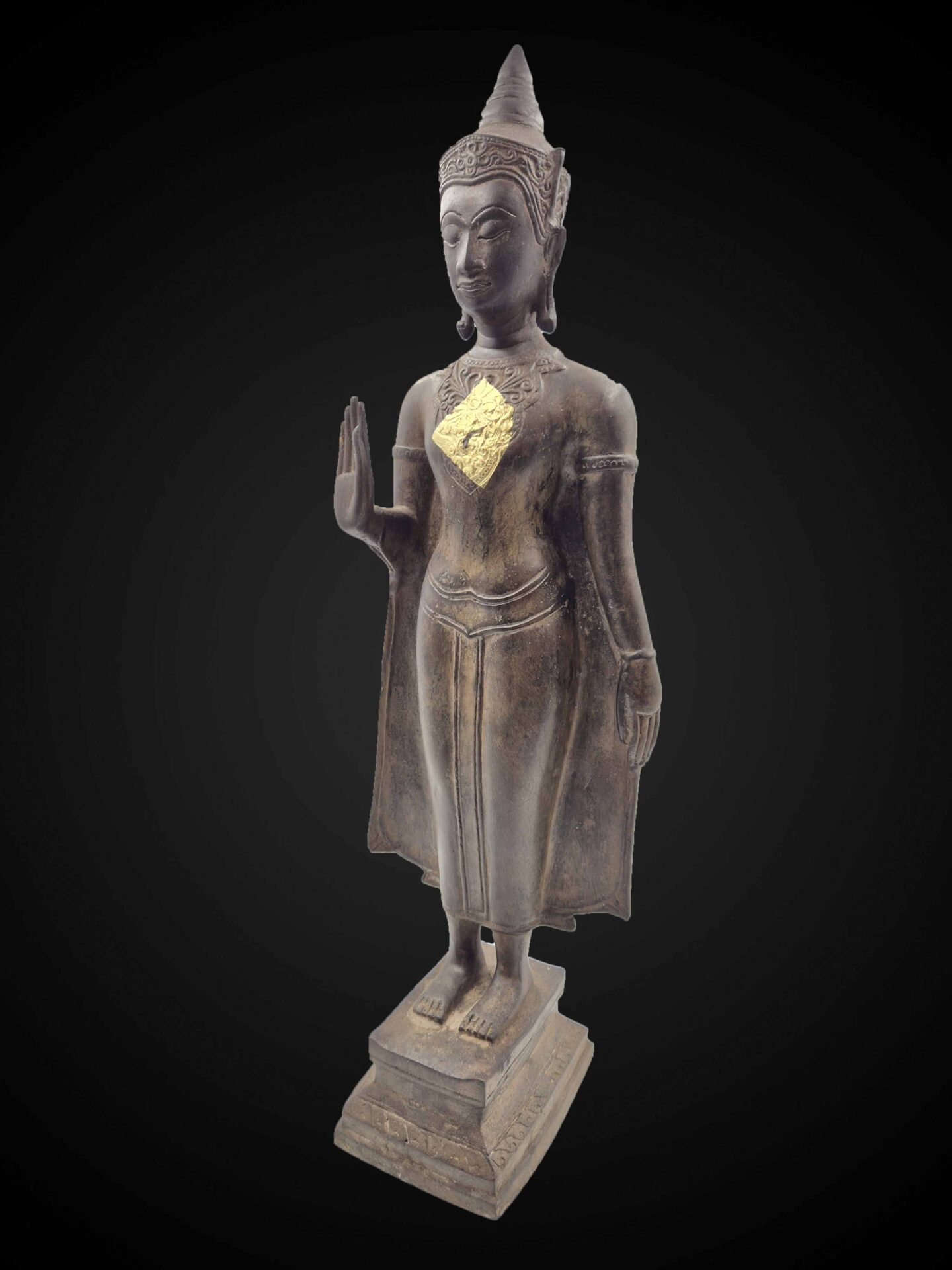
The sculpture features a tall tiered flame finial, elongated earlobes, refined facial contours, and softly arched brows. The symmetrical upright stance and simplified robe treatment are characteristic of devotional bronzes influenced by the broader Tai-Shan artistic tradition.
Decorative detailing around the neckline, waist, and crown adds elegance without overwhelming the calm and balanced composition. Compared to the flowing movement commonly associated with classical Sukhothai art, this piece presents a more grounded and frontal appearance often seen in Lanna-Shan regional devotional sculpture.
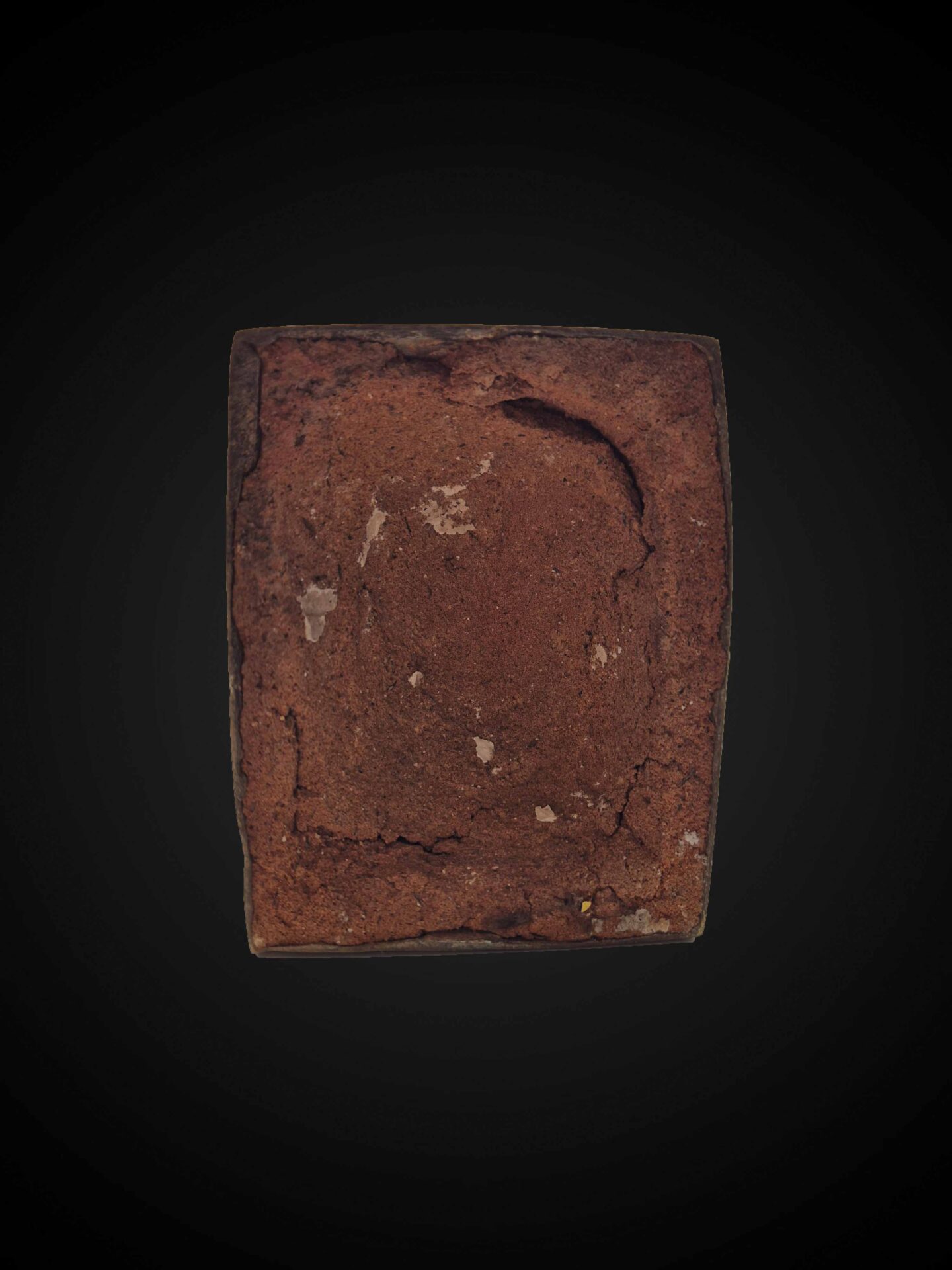
The dark bronze surface carries an aged patina with traces of applied gold leaf at the chest, showing signs of devotional worship and ritual reverence over time. The stepped pedestal base further enhances its traditional temple-style presentation.
Because artistic traditions across Northern Thailand, Shan State, Laos, and neighboring Tai cultural regions often overlap, the statue is best understood as a Lanna–Shan stylistic devotional piece rather than being attributed to a single historical kingdom with certainty.
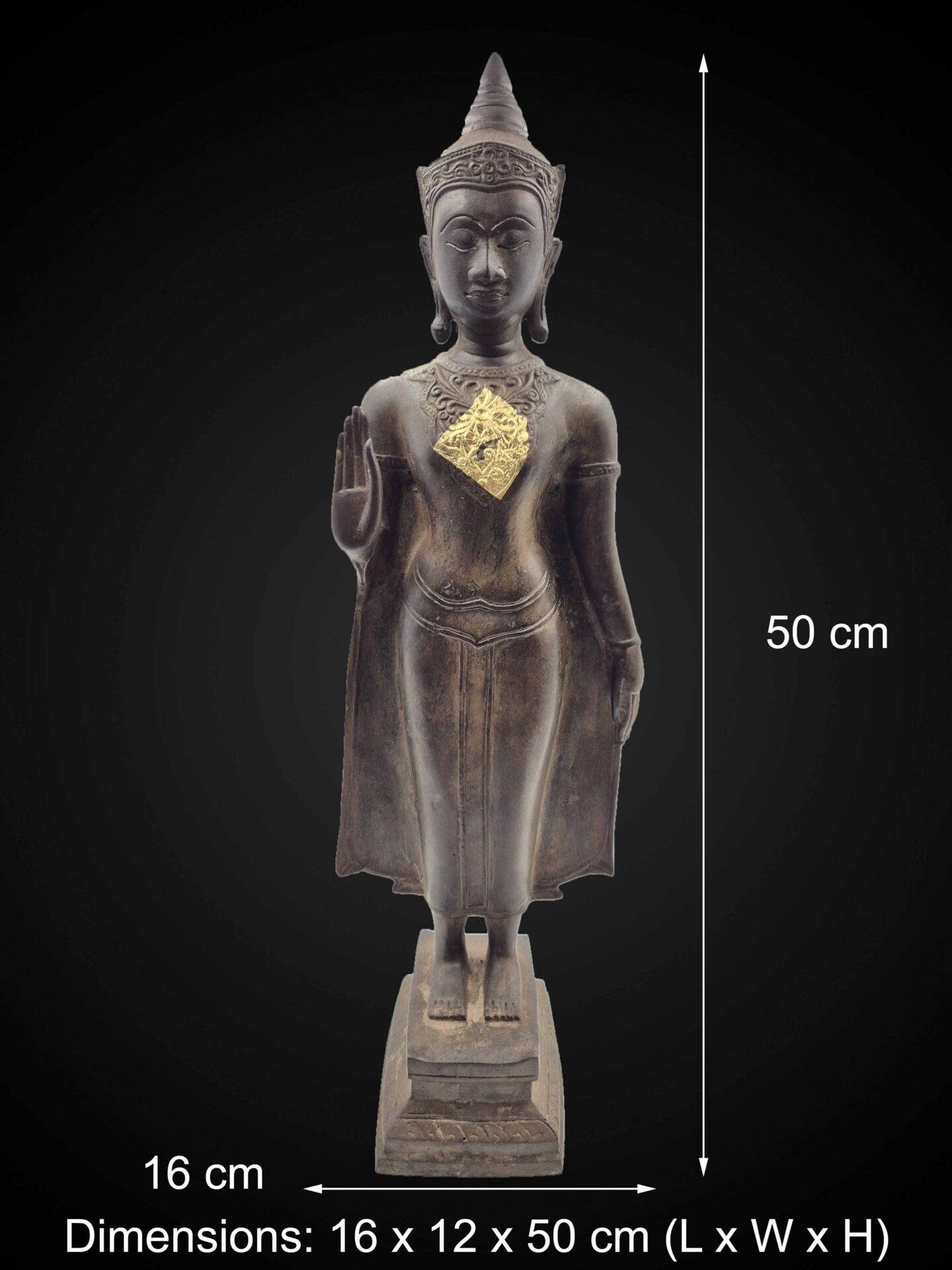
At 50 cm tall, the sculpture has a strong yet serene presence suitable for altars, meditation rooms, or Southeast Asian Buddhist art collections.
Dimensions: 16 × 12 × 50 cm (L × W × H)


