
What Is Om Mani Padme Hum?
Om Mani Padme Hum is one of the most widely recognised Buddhist mantras in the world. Despite consisting of only six syllables, it has been recited by Buddhists for centuries and remains one of the most frequently chanted mantras today.
The mantra is closely associated with Avalokiteśvara, the Bodhisattva of Compassion. Across different Buddhist traditions, Avalokiteśvara is known by various names, including Guanyin in Chinese Buddhism, Kannon in Japan, Gwan-eum in Korea, and Chenrezig in Tibetan Buddhism.
For many practitioners, the mantra serves as a reminder to cultivate compassion, wisdom, and mindfulness in daily life. It appears in Buddhist scriptures, prayer wheels, inscriptions, artwork, and devotional objects throughout Asia and beyond.
The Full Mantra
The complete mantra is:
Om Mani Padme Hum
Sanskrit:
ॐ मणि पद्मे हूँ
Unlike many Buddhist chants that consist of multiple verses or passages, Om Mani Padme Hum is itself the complete mantra. Its brevity has contributed to its popularity across many Buddhist traditions and has helped it become one of the most recognisable mantras in Buddhism.
Who Is Avalokiteśvara?
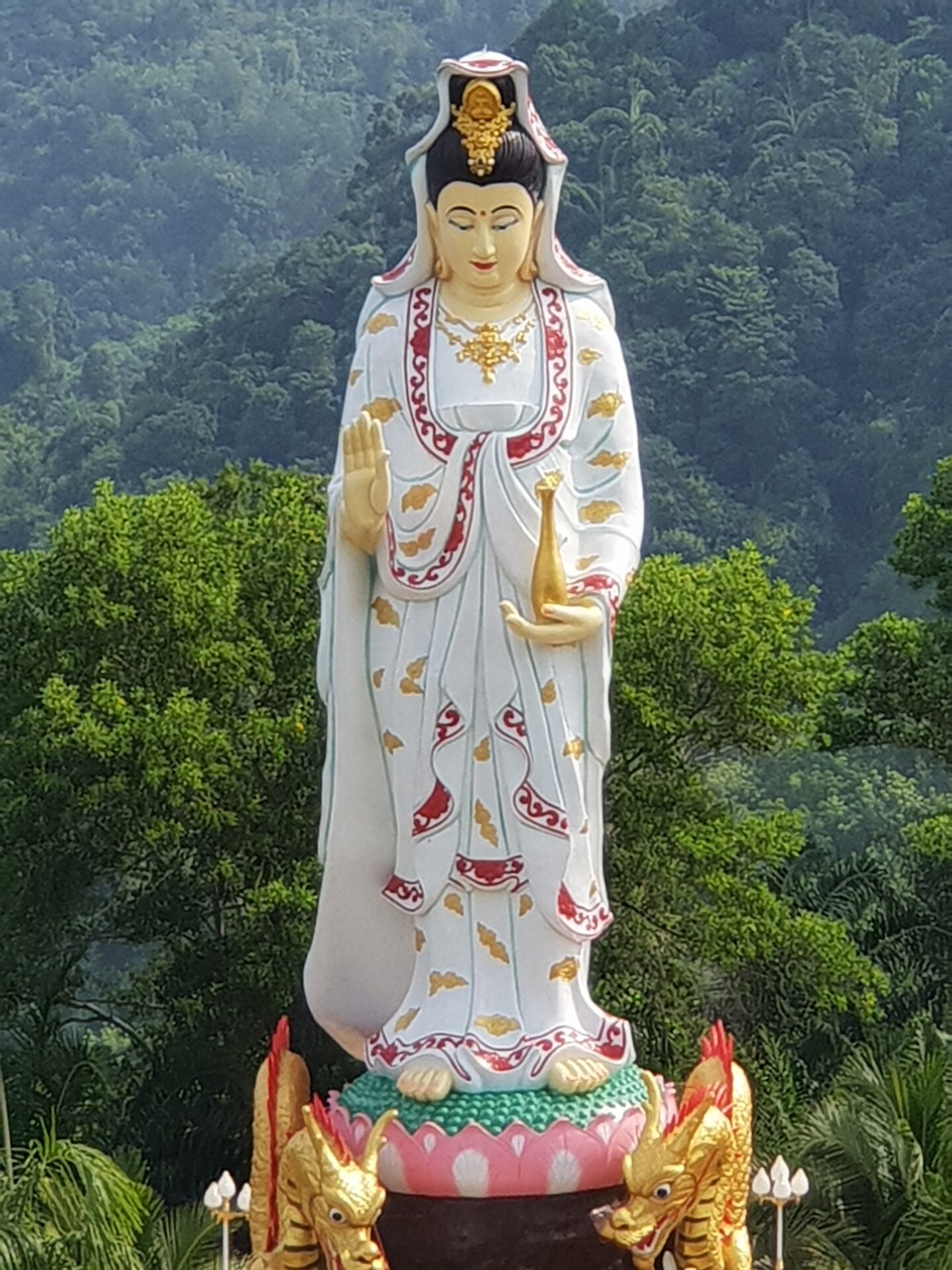
Avalokiteśvara is one of the most revered bodhisattvas in Mahayana Buddhism. A bodhisattva is an enlightened being who postpones final Buddhahood in order to assist all sentient beings on the path towards liberation.
Avalokiteśvara embodies compassion and mercy. Over time, different cultures developed their own names and representations of this figure.
| Tradition | Name |
|---|---|
| Sanskrit Buddhist Tradition | Avalokiteśvara |
| Chinese Buddhism | Guanyin |
| Japanese Buddhism | Kannon |
| Korean Buddhism | Gwan-eum |
| Tibetan Buddhism | Chenrezig |
Although the names and artistic depictions may vary, all refer to the same compassionate bodhisattva.
Why Is Om Mani Padme Hum Associated With Guanyin?
Om Mani Padme Hum is closely associated with Avalokiteśvara, the Bodhisattva of Compassion. In Chinese Buddhism, Avalokiteśvara became known as Guanyin, while other Buddhist traditions refer to the same figure as Kannon, Gwan-eum, or Chenrezig.
The connection between the mantra and Avalokiteśvara originates from Mahayana Buddhist scriptures, where the mantra is linked to the compassionate activities and vows of the bodhisattva. As Buddhism spread across Asia, devotion to Avalokiteśvara developed in different forms, but the association with Om Mani Padme Hum remained.
For this reason, many Buddhist artworks, statues, inscriptions, and devotional objects depicting Avalokiteśvara or Guanyin may also feature the mantra. Although interpretations vary between traditions, Om Mani Padme Hum remains one of the most widely recognised mantras connected to the Bodhisattva of Compassion.
What Does Om Mani Padme Hum Mean?
One of the most common questions asked about the mantra is its meaning. Unlike some religious phrases that have a straightforward translation, Om Mani Padme Hum has been interpreted in different ways throughout Buddhist history.
For this reason, there is no single universally accepted word-for-word translation.
A commonly cited interpretation of the six syllables is shown below:
| Syllable | Common Interpretation |
|---|---|
| Om | Purity of body, speech and mind |
| Ma | Compassion |
| Ni | Jewel |
| Pad | Lotus |
| Me | Wisdom |
| Hum | Unity, enlightenment, or spiritual integration |
Many Buddhist teachers explain the mantra as representing the union of compassion and wisdom, two qualities regarded as essential on the path towards enlightenment.
It is important to note that interpretations vary between traditions and teachers. While the symbolism may differ, most explanations emphasise compassion, wisdom, and spiritual development.
Why Is the Mantra So Important?
The enduring popularity of Om Mani Padme Hum stems largely from its association with compassion.
Compassion occupies a central place in many Buddhist traditions. Rather than focusing solely on personal liberation, practitioners are encouraged to develop kindness, empathy, and concern for the wellbeing of all living beings.
Because Avalokiteśvara represents these ideals, the mantra became a powerful symbol of compassionate practice throughout the Buddhist world.
For many devotees, reciting the mantra serves as a reminder to approach life with patience, understanding, and goodwill towards others.
Interpretations Across Buddhist Traditions
Although the mantra is widely recognised, different Buddhist traditions may emphasise different aspects of its meaning.
| Tradition | General Emphasis |
|---|---|
| Indian Mahayana Buddhism | Compassion and the bodhisattva path |
| Tibetan Buddhism | Compassion, purification, and spiritual cultivation |
| Chinese Buddhism | Mercy, kindness, and the compassionate vows of Guanyin |
| Japanese Buddhism | Compassion and assistance to sentient beings |
| Modern Global Buddhism | Mindfulness, compassion, and personal spiritual practice |
These interpretations are not necessarily contradictory. Instead, they reflect the diverse ways Buddhist communities have understood and applied the mantra throughout history.
Om Mani Padme Hum in Buddhist Art and Culture
The influence of Om Mani Padme Hum extends far beyond chanting alone.
Throughout Asia, the mantra can be found on:
- Temple inscriptions
- Prayer wheels
- Stone carvings
- Buddhist paintings
- Statues and devotional objects
- Prayer flags
- Sacred manuscripts
Its widespread appearance reflects its importance within Buddhist culture and devotional practice.
Many Buddhist artworks depicting Avalokiteśvara or Guanyin also feature the mantra as part of their iconography, further reinforcing the connection between the bodhisattva and the six sacred syllables.
Frequently Asked Questions
What does Om Mani Padme Hum mean?
Om Mani Padme Hum is a Buddhist mantra associated with Avalokiteśvara, the Bodhisattva of Compassion. While there is no universally accepted word-for-word translation, it is commonly understood as expressing compassion, wisdom, and spiritual cultivation.
Is Om Mani Padme Hum the full mantra?
Yes. Unlike many Buddhist chants that consist of multiple verses, Om Mani Padme Hum is itself the complete mantra. The six syllables form the entire mantra.
Who is Om Mani Padme Hum dedicated to?
The mantra is traditionally associated with Avalokiteśvara, known as Guanyin in Chinese Buddhism, Kannon in Japan, Gwan-eum in Korea, and Chenrezig in Tibetan Buddhism.
Is Om Mani Padme Hum Tibetan or Buddhist?
Both. The mantra is Buddhist in origin and is revered across multiple Buddhist traditions. Although it is strongly associated with Tibetan Buddhism today, it is not exclusively Tibetan.
Is Guanyin the same as Avalokiteśvara?
Yes. Guanyin is the Chinese form of Avalokiteśvara, the Bodhisattva of Compassion. Different Buddhist cultures use different names for the same figure.
What language is Om Mani Padme Hum?
The mantra is traditionally written in Sanskrit:
ॐ मणि पद्मे हूँ
It has been transmitted and recited throughout Asia for centuries.
Why Does Om Mani Padme Hum Remain Popular Today?
Few Buddhist mantras have achieved the global recognition of Om Mani Padme Hum.
Its brevity makes it easy to remember, while its association with compassion gives it a message that resonates across cultures and traditions. Whether encountered in a temple, a piece of Buddhist art, or during personal meditation, the mantra continues to serve as a reminder of kindness, wisdom, and the aspiration to benefit others.
For this reason, Om Mani Padme Hum remains one of the most enduring and widely recited mantras in the Buddhist world.
Conclusion
Om Mani Padme Hum is a six-syllable Buddhist mantra associated with Avalokiteśvara, the Bodhisattva of Compassion. Revered across multiple Buddhist traditions, it has been interpreted in various ways throughout history, yet consistently reflects themes of compassion, wisdom, and spiritual cultivation.
Despite its brevity, the mantra has inspired centuries of devotion, scholarship, art, and practice. Today, it remains one of the most recognisable and widely recited mantras in Buddhism.
Continue Exploring Buddhist Traditions
Interested in learning more about Buddhist mantras, symbols, and practices? Explore our related guides below:
- Medicine Buddha Mantra (药师心咒) – Meaning, Benefits & How to Chant
- Diamond Armour Yantra (金刚经护身经文)
- A Comprehensive Guide to Buddhist Mudras & Postures
You may also wish to browse our collection of Buddha, monk, and deity statues inspired by Buddhist traditions throughout Asia.