
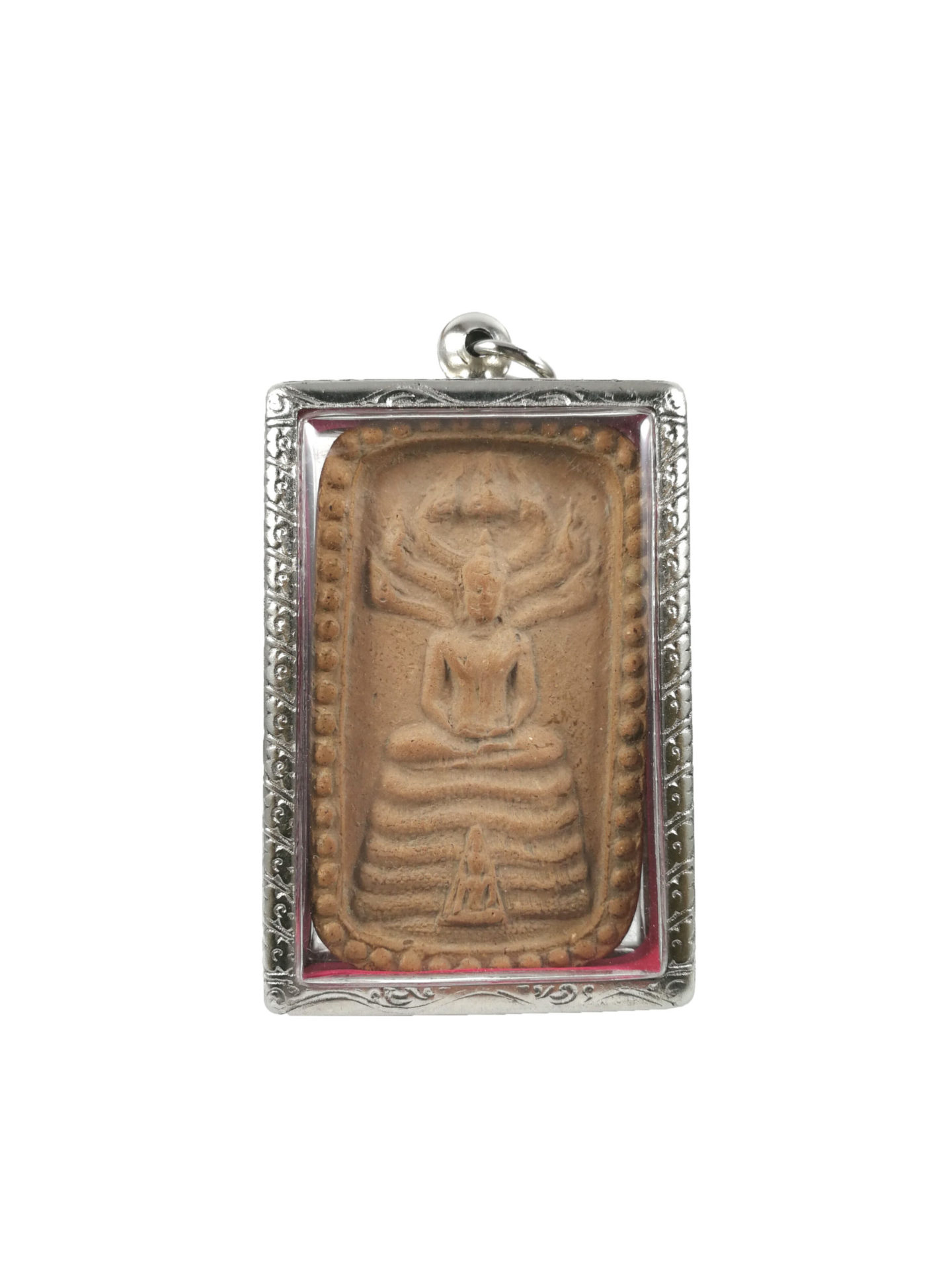
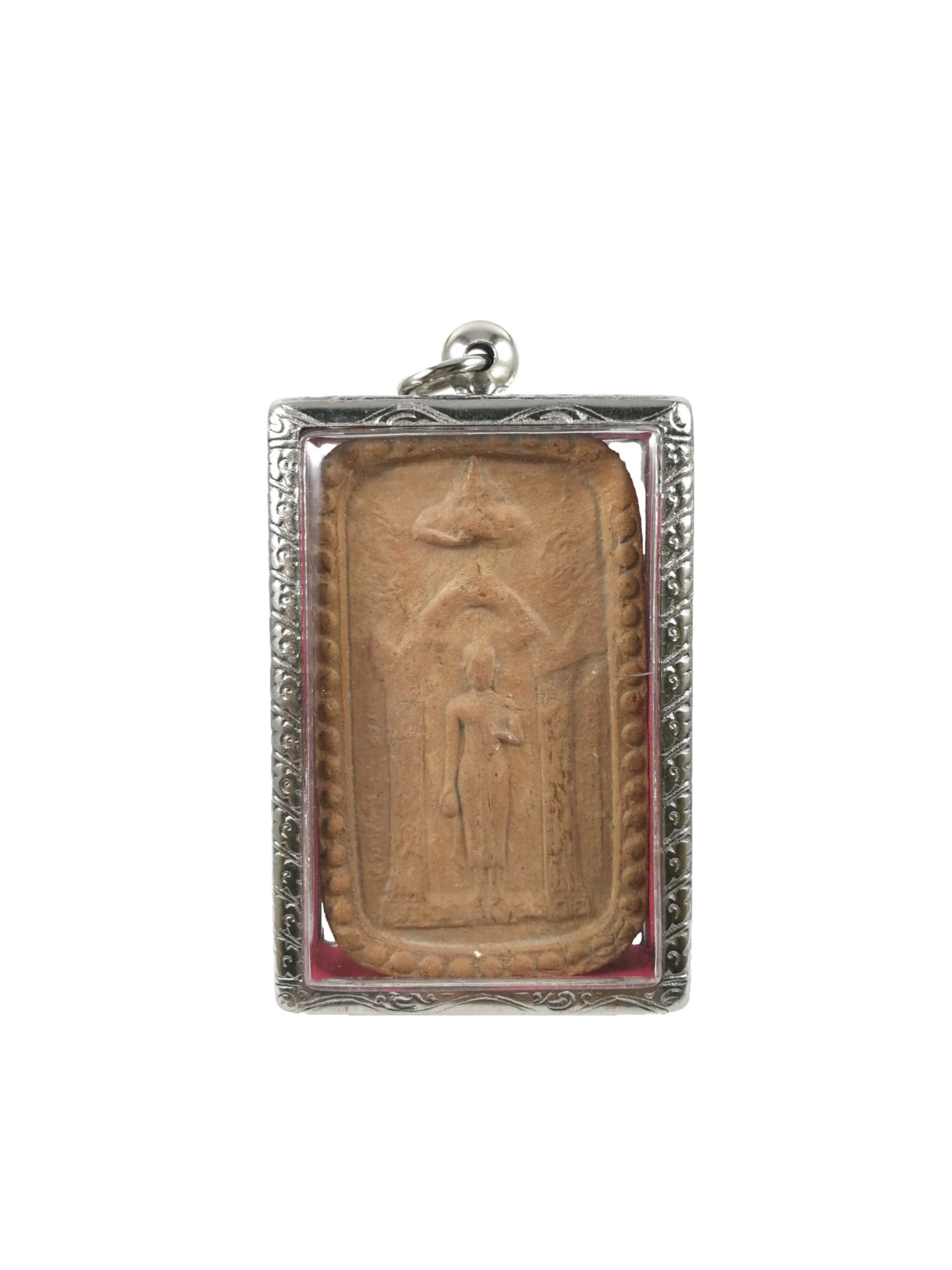
Description
Phra Nak Prok – The Buddha Sheltered by the Naga
Phra Nak Prok (พระนาคปรก), commonly known as the Buddha Sheltered by the Naga, is one of the most distinctive representations in Thai Buddhist art. Featuring the Buddha seated beneath the expanded hood of a serpent king, this traditional image holds an important place within Thailand’s religious heritage and amulet-making traditions.
The origins of Phra Nak Prok are associated with an event following the enlightenment of the Buddha. According to Buddhist tradition, during the sixth week after attaining enlightenment, the Buddha was seated in meditation beneath the Mucalinda tree when a severe storm arose. Mucalinda, the Naga king residing nearby, emerged and coiled his body around the Buddha, spreading his hood above him to provide shelter from the rain and wind.
This traditional account became an important subject in Buddhist art, representing the Buddha’s composure, spiritual discipline and peaceful meditation despite the surrounding storm. The Naga’s sheltering gesture also reflects the symbolic relationship between the Buddha and the mythical serpent guardians found throughout Southeast Asian Buddhist traditions.
Phra Nak Prok typically depicts the Buddha seated in the meditation posture, with both hands resting upon the lap. Beneath him, the coiled body of the Naga forms a distinctive pedestal, while its expanded hood rises behind the Buddha. Seven-headed Naga designs are particularly recognisable, although representations with different numbers of serpent heads are also found across regional artistic traditions.
The image has a longstanding history in Southeast Asian Buddhist art, particularly within Khmer and Lopburi artistic traditions. Its distinctive composition later became widely represented in Thai temples, religious sculptures and traditional amulets. In Thai Buddhist culture, Phra Nak Prok is also recognised as the Buddha image associated with Saturday.
Phra Nak Prok amulets have been produced by various Thai temples and creators using materials such as pressed powders, fired clay, bronze and other metal alloys. Individual editions display differences in the Buddha’s proportions, Naga hood, decorative details and inscriptions, reflecting the artistic influences and production methods of different periods.
Today, Phra Nak Prok amulets remain valued by Buddhist devotees and collectors for their religious significance, distinctive Naga imagery, historical associations and traditional Thai craftsmanship.


