
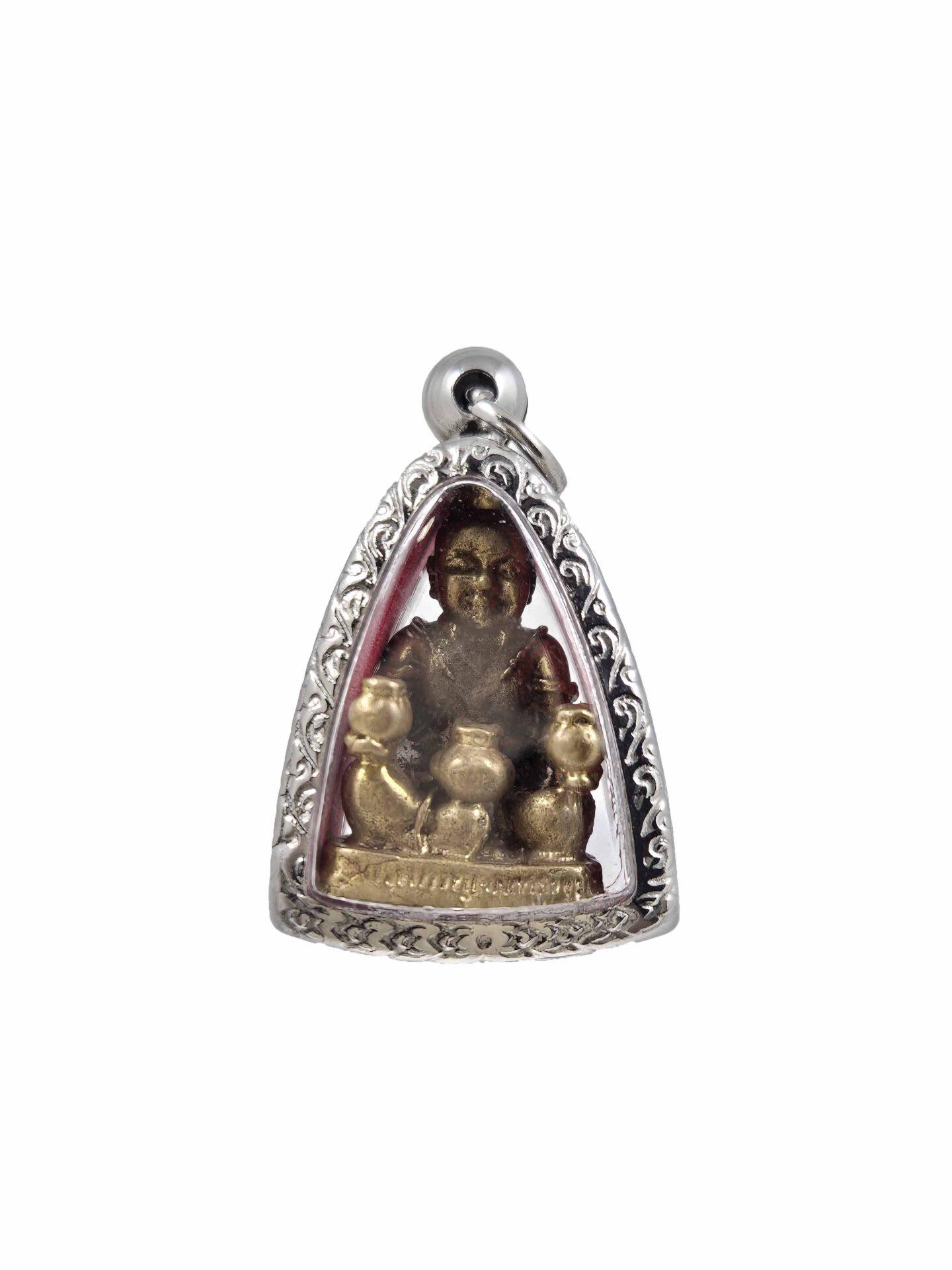
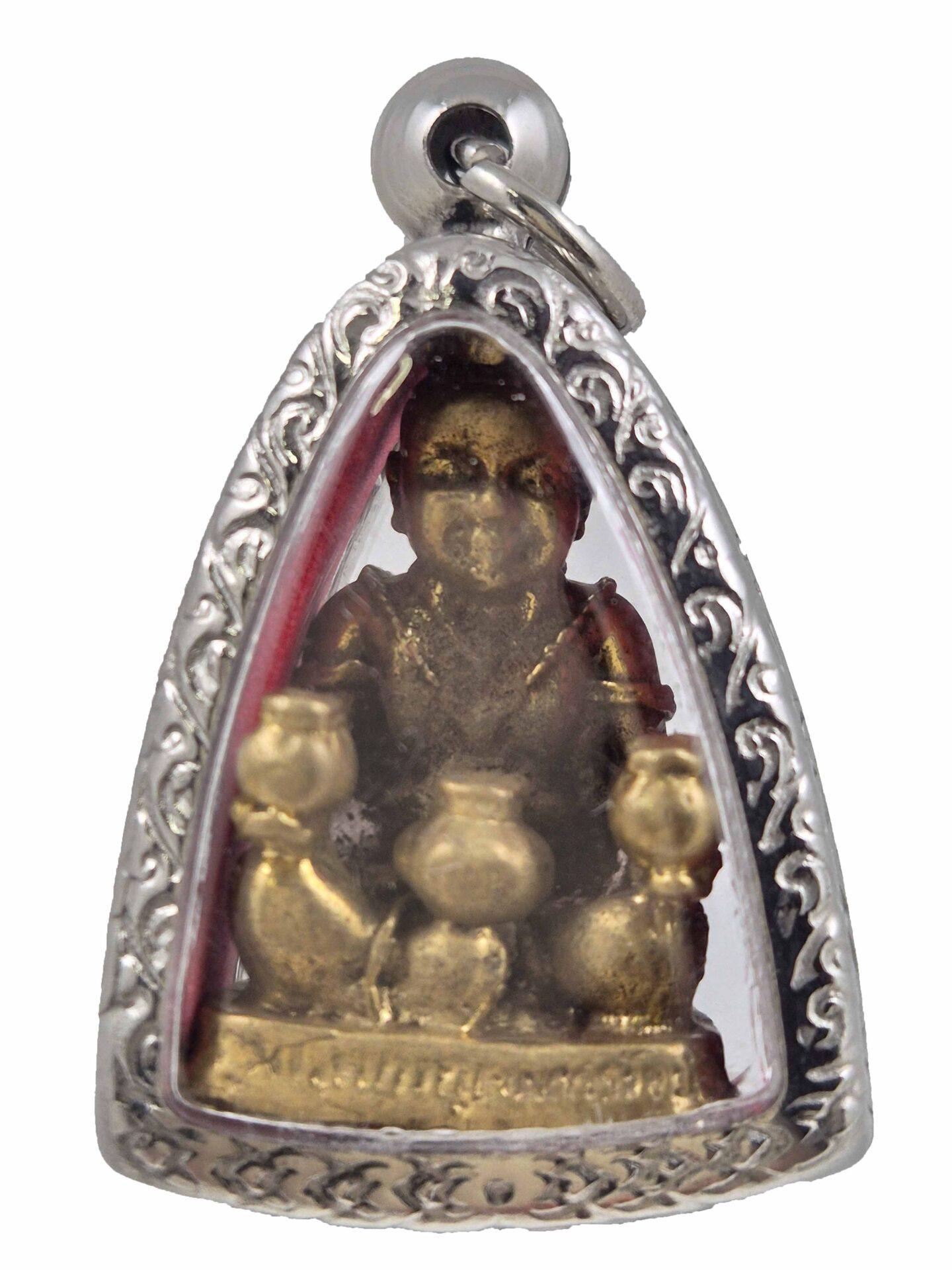
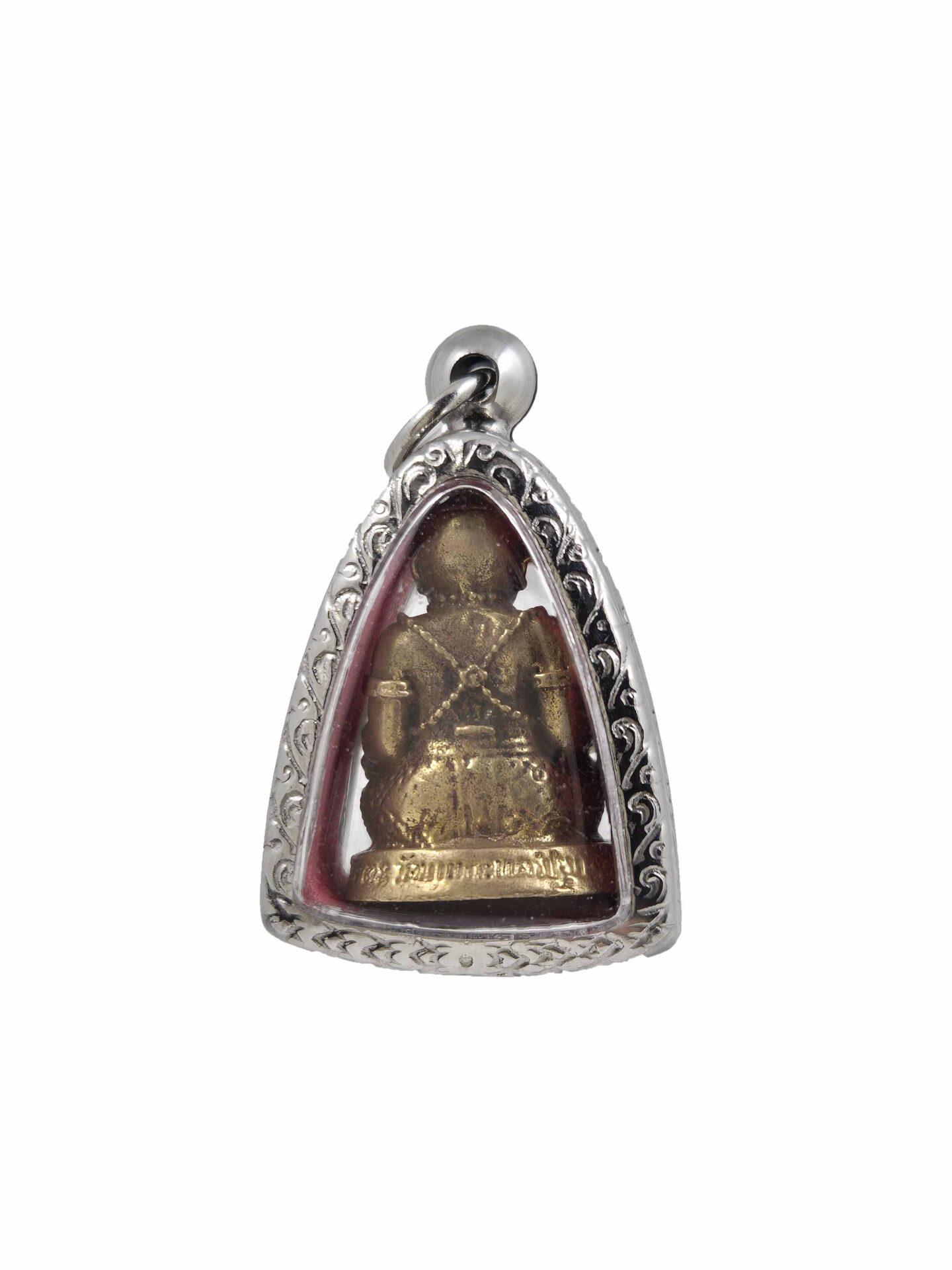
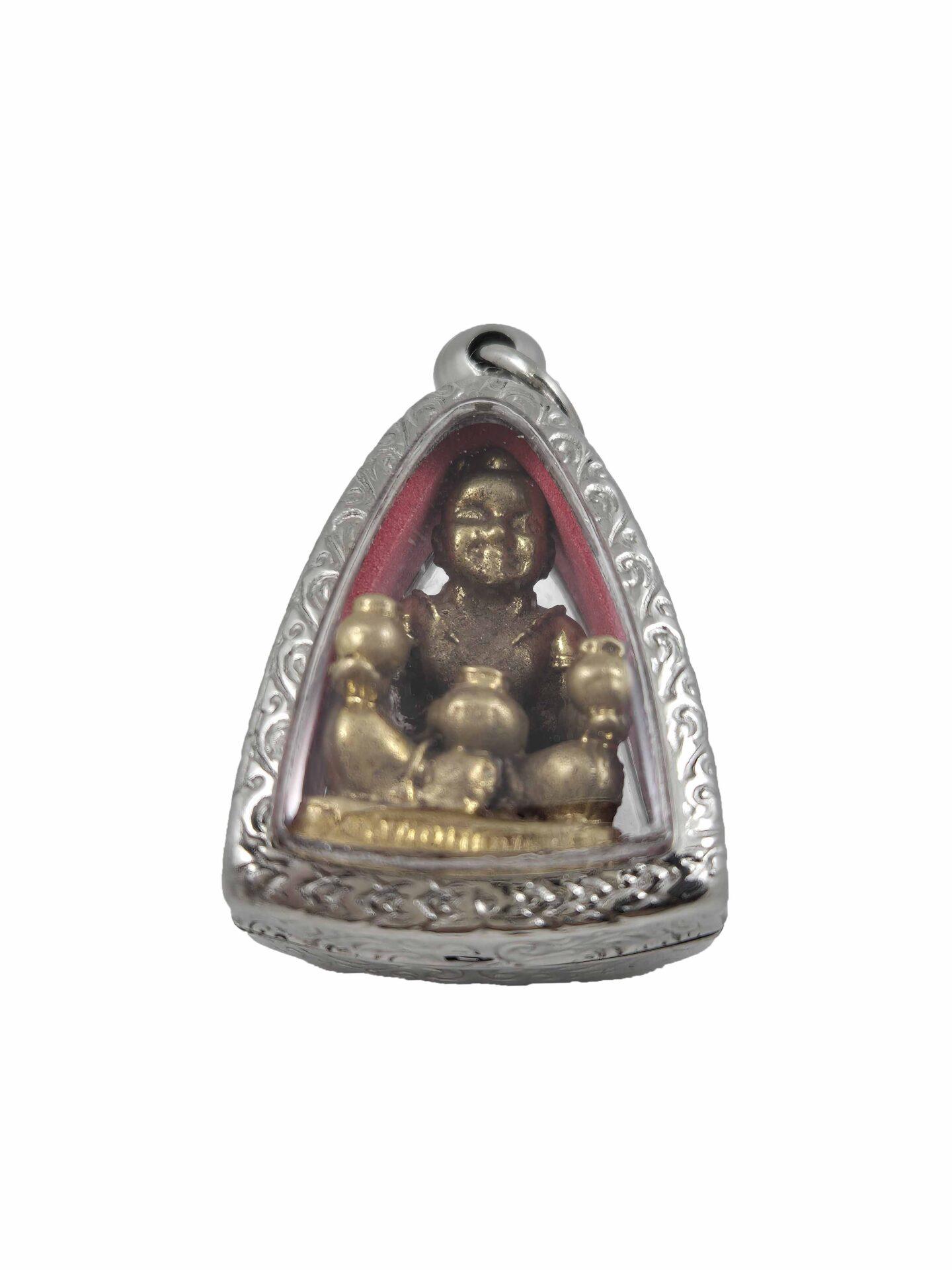
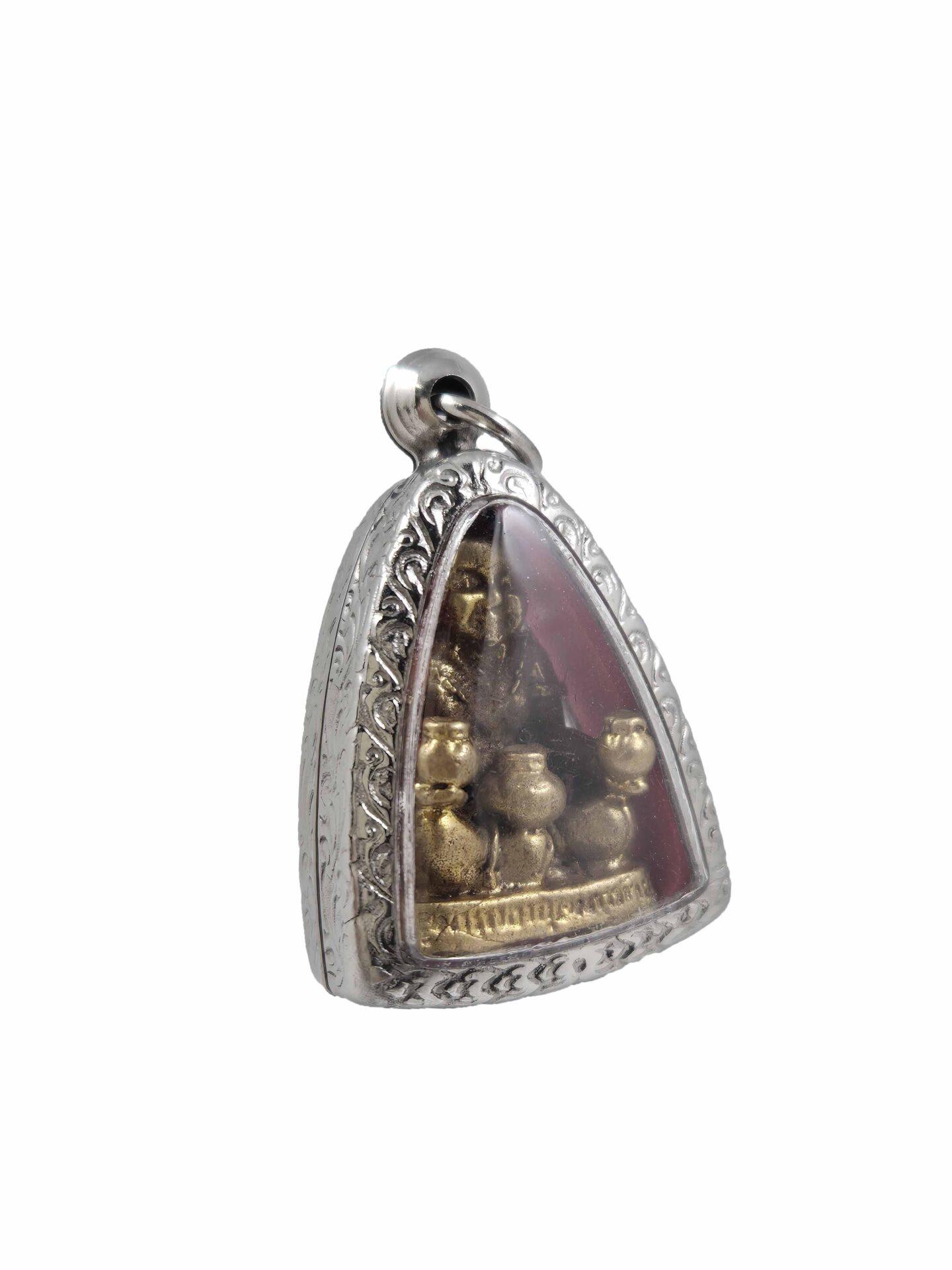
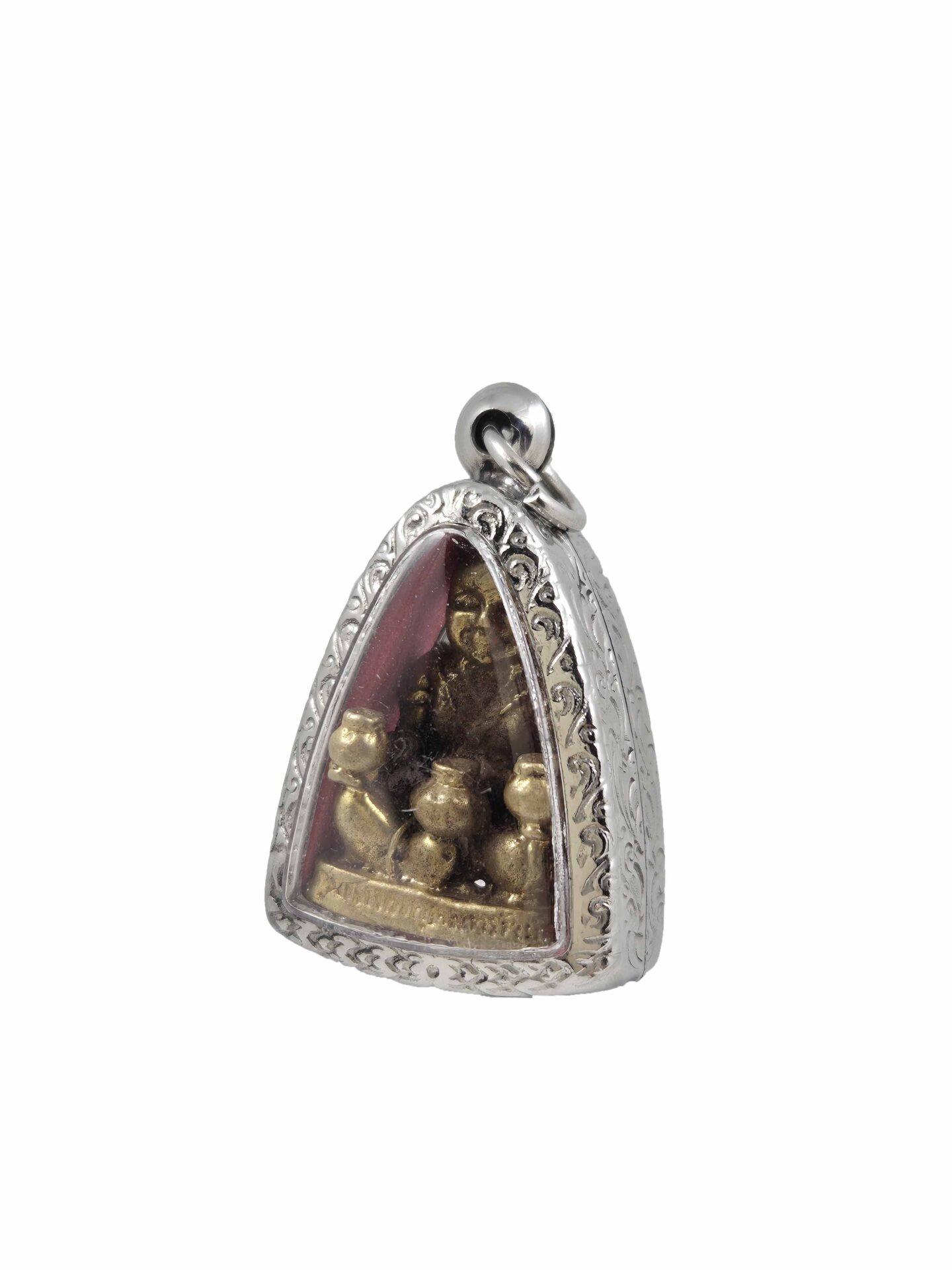
Description
Kuman Thong – The Golden Child of Thai Folklore
Kuman Thong (กุมารทอง), commonly translated as the Golden Child or Golden Boy, is one of the most distinctive figures in Thai folklore and traditional amulet culture. Recognised for its characteristic representation of a young boy, Kuman Thong holds a longstanding place within Thailand’s religious traditions, cultural beliefs and artistic heritage.
The origins of Kuman Thong are closely connected to traditional Thai folklore and local spirit beliefs, which have developed alongside Buddhist customs over many generations. One of its most recognised literary associations appears in the classical Thai epic Khun Chang Khun Phaen, where the Golden Child forms part of the story’s traditional folklore. Over time, Kuman Thong became a widely recognised figure within Thai cultural and religious practices.
In traditional Thai culture, Kuman Thong is often represented as a child guardian figure. These representations reflect longstanding folk beliefs about companionship, respect and the relationship between people and the spiritual world. Such traditions vary considerably between communities, temples and individual practitioners.
Kuman Thong amulets and figurines are commonly depicted as young boys wearing traditional Thai clothing, sometimes adorned with decorative headpieces or gold-coloured finishes. Designs may feature seated, standing or kneeling figures, with variations in facial expressions, postures and decorative details. Contemporary examples are produced using materials such as clay, wood, metal, resin and other composite materials, depending on the individual creator and production period.
An interesting aspect of Kuman Thong’s cultural tradition is the practice of presenting symbolic offerings, such as sweets, drinks or toys. These customs reflect the personal and devotional practices of certain followers, although their significance and observance differ between individuals and traditions.
Kuman Thong imagery has also become a recognisable feature of Thai popular culture, appearing in literature, films, traditional artwork and decorative objects. Its continued presence reflects the influence of folklore on Thailand’s evolving cultural identity.
Today, Kuman Thong remains a distinctive part of Thai cultural heritage, valued by devotees and collectors for its traditional symbolism, cultural associations and varied artistic craftsmanship.


