
Moving into a new home marks the beginning of a new chapter in life. For Buddhist families, preparing a new residence often involves more than arranging furniture and settling into unfamiliar surroundings. It may also mean establishing a sacred space where the family can continue their daily prayers, offerings and Buddhist practices.
A Buddha statue holds a special place in many Buddhist households. Rather than serving as a decorative ornament, it represents the Buddha and serves as a focus for devotion, reflection and remembrance of his teachings.
Whether you are setting up your first Buddhist altar, relocating a family altar or looking for a suitable Buddha statue for your new home, there are several important considerations to keep in mind.
Why Buddhist Families Welcome a Buddha Statue Into Their New Home
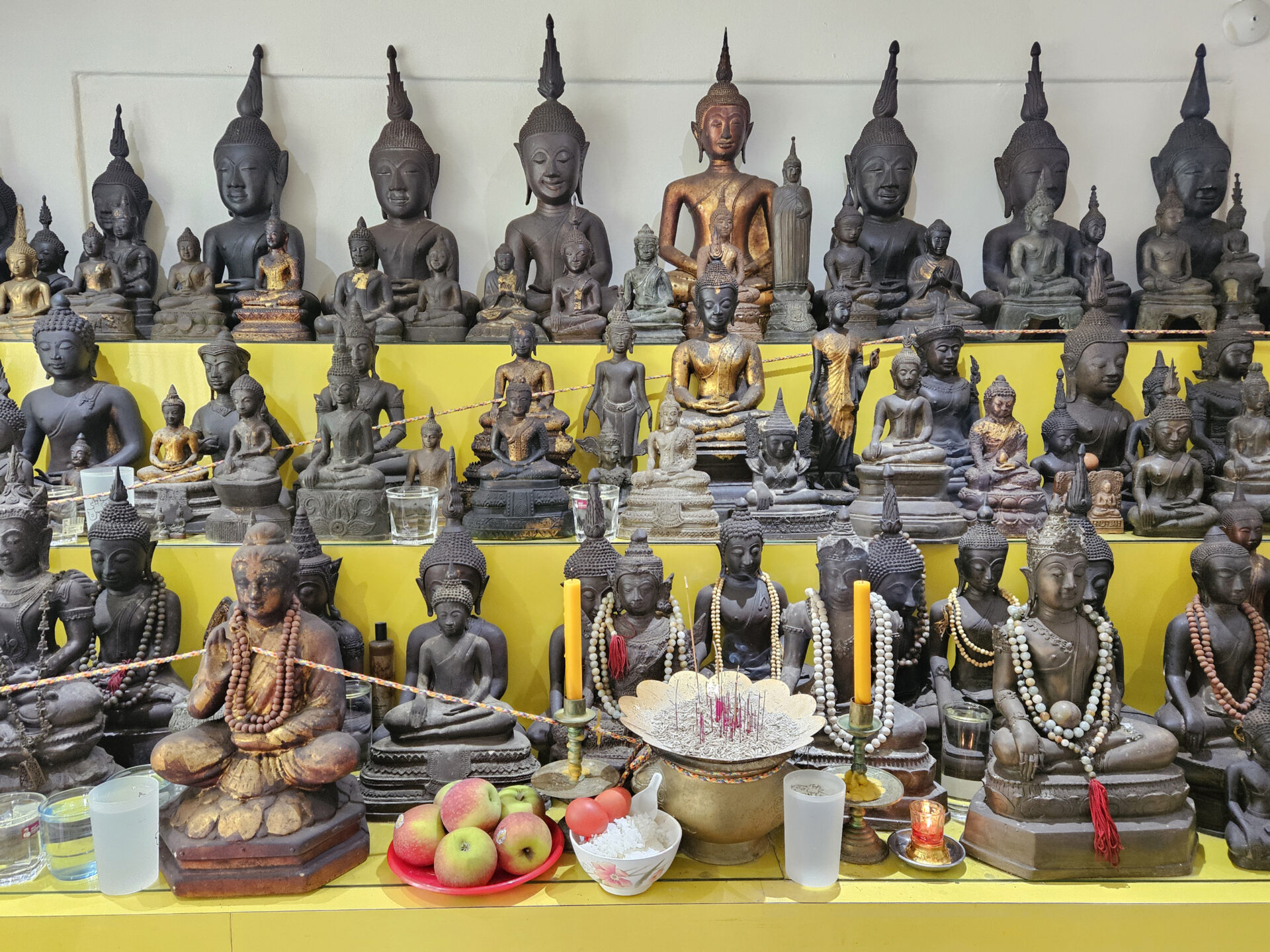
Throughout Buddhist history, images of the Buddha have been honoured in temples, monasteries and private residences. In many Buddhist households, a Buddha statue occupies a dedicated altar where family members gather to pay respects, make offerings, chant and meditate.
Establishing a home altar represents a commitment to maintaining Buddhist teachings and traditions within everyday family life.
For families moving into a new residence, the altar can also provide a sense of continuity. While the physical surroundings may change, the family’s faith and devotional practices remain.
A home altar need not be elaborate or expensive. What matters most is that it provides a respectful place for worship and encourages the household to cultivate compassion, wisdom and mindfulness.
How to Choose a Buddha Statue for Your New Home
Choosing a Buddha statue is a personal decision, particularly when it is intended for long-term worship.
Some Buddhist families follow established traditions when selecting a sacred image. Others may prefer a particular Buddha representation because of its symbolism, familiarity or significance to their family.
Consider the Buddha Representation
Different Buddha statues depict particular events, teachings or qualities associated with the Buddha.
Earth-Touching Buddha (Bhumisparsha Mudra)
One of the most recognisable forms in Thai Buddhist art, the Earth-Touching Buddha depicts the moment of enlightenment, when the Buddha called upon the earth to witness his awakening. This posture symbolises spiritual determination and overcoming obstacles on the path to enlightenment.
Meditation Buddha (Dhyana Mudra)
The Meditation Buddha is shown seated with both hands resting in the lap. This representation is associated with concentration, meditation and inner tranquillity, making it meaningful for families who maintain regular chanting or meditation practices.
Abhaya Buddha (Gesture of Reassurance)
The Abhaya Mudra features a raised hand with the palm facing outward. Traditionally associated with fearlessness and reassurance, this gesture reminds devotees of the importance of cultivating courage and compassion.
There is no single Buddha posture that every family must choose for a new home. The most appropriate representation often depends on the family’s Buddhist tradition, established devotional practices and personal sense of reverence.
For a more detailed explanation of these gestures, you may explore our Guide to Buddhist Mudras and Postures.
Choose a Suitable Size for Your Home Altar
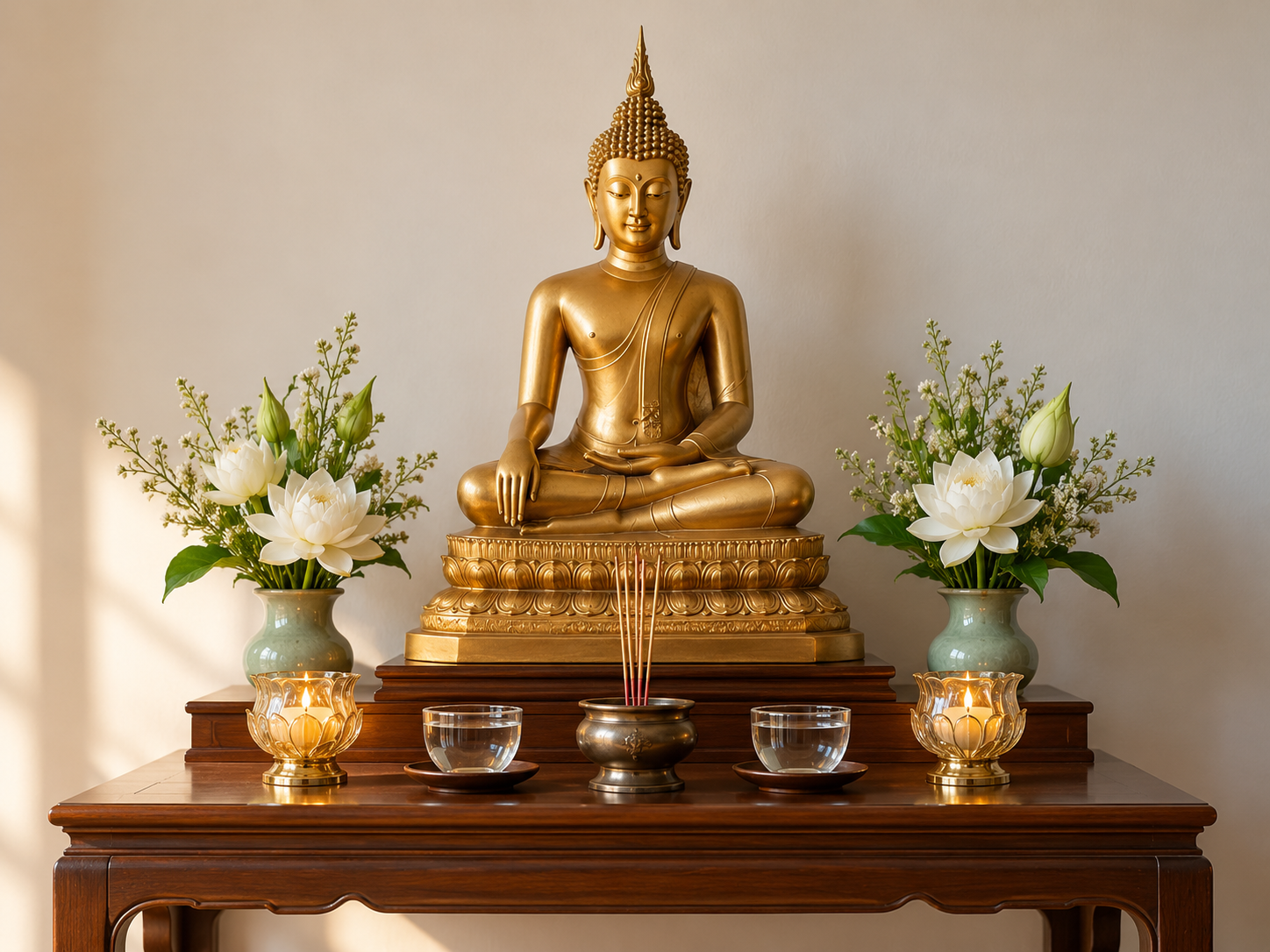
Before purchasing a Buddha statue, consider where the altar will be positioned and how much space is available.
For smaller homes or apartments, a compact or medium-sized statue may be suitable for a dedicated altar cabinet or prayer corner. Larger residences may provide space for more substantial statues or a separate prayer room.
Apart from height, pay attention to the statue’s width, depth and weight. Some seated Buddha statues have wide pedestals, while others feature elaborate ornamental bases that require additional space.
A statue should rest securely on a stable surface, with sufficient room for offerings and comfortable access during daily worship.
Choosing an appropriately sized statue allows the altar to remain practical, respectful and easy to maintain over time.
Consider the Material and Craftsmanship
Buddha statues are traditionally produced in materials such as bronze, brass, wood and stone.
Bronze and brass are particularly common in Thai and Southeast Asian Buddhist sculpture. These metals are valued for their durability and suitability for detailed casting, allowing artisans to create intricate robes, facial features and ornamental pedestals.
Some statues feature natural patina, traces of gilding or applied gold leaf, reflecting their surface characteristics and, in some cases, their history of use.
However, the religious significance of a Buddha statue should not be measured by its material, size or monetary value alone.
For Buddhist families, the statue’s ability to inspire genuine devotion and serve as a meaningful focus for worship is often more important than its outward appearance.
You can read more about traditional styles and materials in our Complete Guide to Thai Buddha Statues.
Where Should You Place a Buddha Statue in Your New Home?
Choosing a suitable location for a Buddhist altar is an important part of preparing a new residence.
Although customs vary between Buddhist traditions and individual households, several principles are commonly observed.
Select a Clean and Respectful Location
A Buddha altar is generally placed in a clean, peaceful and elevated area of the home.
A dedicated prayer room is ideal where space permits, although a suitable section of the living room can also serve as a respectful place for worship.
It is advisable to avoid placing sacred images directly on the floor, near bathrooms or in locations where they may be accidentally knocked over or treated casually.
The altar should remain accessible for prayers and offerings without interfering with ordinary household activities.
Should a Buddha Statue Face a Particular Direction?
Some Buddhist families observe traditional preferences concerning the direction of their home altar. These may be influenced by family customs, temple teachings or local cultural practices.
However, there is no single compass direction universally required across all Buddhist traditions.
Instead of choosing a position solely according to direction, consider whether the altar is appropriately elevated, secure, clean and conducive to prayer.
Families who follow particular religious customs may also seek guidance from a respected monk or their regular temple when arranging a new altar.
Preparing the Altar for Daily Worship
A home altar may include an incense holder, offering bowls, flowers, lamps or other devotional objects according to the family’s religious tradition.
The Buddha statue is generally given a prominent and respectful position.
When arranging the altar, leave sufficient space for offerings and ensure that incense, candles and lamps can be used safely. Open flames should be kept away from curtains and other flammable materials and should never be left unattended.
Ultimately, a simple and well-maintained altar can be just as meaningful as an elaborate arrangement.
Moving an Existing Buddha Statue to a New House
For families who already maintain a Buddhist altar, moving to a new home may involve relocating a Buddha statue that has been worshipped for many years.
Such statues may carry considerable personal significance, particularly when they have been part of family prayers and religious observances across generations.
Before moving, some families choose to offer prayers or informally mark the relocation according to their established customs.
During transportation, the statue should be handled carefully, wrapped in suitable protective materials and secured to prevent damage.
Heavier bronze statues require particular attention because their weight, projecting features and ornamental bases may make them difficult to transport safely.
Once the statue reaches the new residence, it can be respectfully installed on the prepared altar, with prayers or offerings made according to the family’s usual practices.
There is no single relocation ceremony applicable to every Buddhist tradition. Families may follow their own customs or consult their regular temple for guidance.
Continuing Daily Prayers and Offerings at Home
Welcoming a Buddha statue into a new residence is not simply a one-time occasion. For many Buddhist families, it marks the continuation of an ongoing devotional practice.
Regular practices may include offering fresh water or flowers, lighting incense where appropriate, reciting Buddhist chants, meditating or bowing respectfully before the altar.
These acts are expressions of reverence and opportunities to reflect upon the Buddha’s teachings.
The frequency and form of worship naturally differ between households. Some families maintain daily morning and evening prayers, while others observe particular Buddhist holy days or follow practices taught by their temples.
Maintaining a clean altar, refreshing offerings and caring for the statue are also expressions of respect.
It is worth remembering that Buddhist devotion is not measured solely by the number of offerings made. Sincerity, mindfulness and the effort to practise the teachings in everyday life remain fundamental.
Our Approach to Buddha Statues at Old Thai Amulets
At Old Thai Amulets, we regard Buddha statues as sacred representations deserving of continued reverence and respect.
The Buddha statues in our care are not simply stored or displayed as decorative merchandise. They are actively worshipped through regular prayers and offerings as part of our ongoing Buddhist devotional practices.
This is an important part of how we maintain and care for our collection.
We appreciate the artistic craftsmanship, traditional materials and regional influences reflected in each statue, but we believe their significance extends well beyond their physical appearance.
For us, these statues are not merely decorative objects intended to enhance the appearance of a room. They are sacred representations that form part of a living practice of Buddhist devotion.
When a statue leaves our care and is welcomed into a new home, our sincere hope is that it will find a family who shares this understanding.
We wish for these statues to continue being honoured through prayers, offerings and respectful care, becoming a meaningful part of their new household’s spiritual life.
Rather than viewing the purchase of a Buddha statue as an ordinary transaction, we see it as an opportunity for a sacred representation already maintained through regular worship to continue its devotional purpose in another home.
Frequently Asked Questions About Buddha Statues for a New Home
Which Buddha statue is best for a new house?
There is no universally prescribed Buddha statue for every new household. Earth-Touching and Meditation Buddha representations are common choices in Thai Buddhist tradition. Families may choose according to their religious practices, personal devotion and altar arrangements.
Can I place a Buddha statue in the living room?
Yes. Many Buddhist families maintain home altars in their living rooms, particularly when a dedicated prayer room is unavailable. The location should be clean, elevated, secure and suitable for respectful worship.
Do I need a large Buddha statue for my home altar?
No. A smaller statue can serve as a meaningful focus for worship. The available altar space, stability and the family’s devotional needs are more important considerations than size alone.
Can I continue worshipping a Buddha statue that was previously worshipped by someone else?
A Buddha statue that has been respectfully maintained in another household can generally be welcomed into a new devotional setting. Families may follow their own customs when installing it on a home altar, including prayers where appropriate.
Finding a Buddha Statue for Your New Home
Choosing a Buddha statue for a new residence is a meaningful decision, especially for families who intend to maintain regular prayers and Buddhist traditions.
The right statue is not necessarily the largest, most elaborate or most expensive. It is one that resonates with the family’s faith, suits the intended altar and can be respectfully maintained for years to come.
At Old Thai Amulets, our collection includes Buddha statues reflecting Thai, Myanmar, Lao and other Asian Buddhist artistic traditions, with various sizes, postures and materials available.
Our approach is rooted in ongoing worship and respect. We hope that each statue will eventually find a like-minded Buddhist family who values its sacred significance and will continue the devotional practices associated with its care.
For those preparing a new Buddhist home altar, we warmly invite you to explore our Buddha Statue Collection and find a suitable sacred representation for your household.