
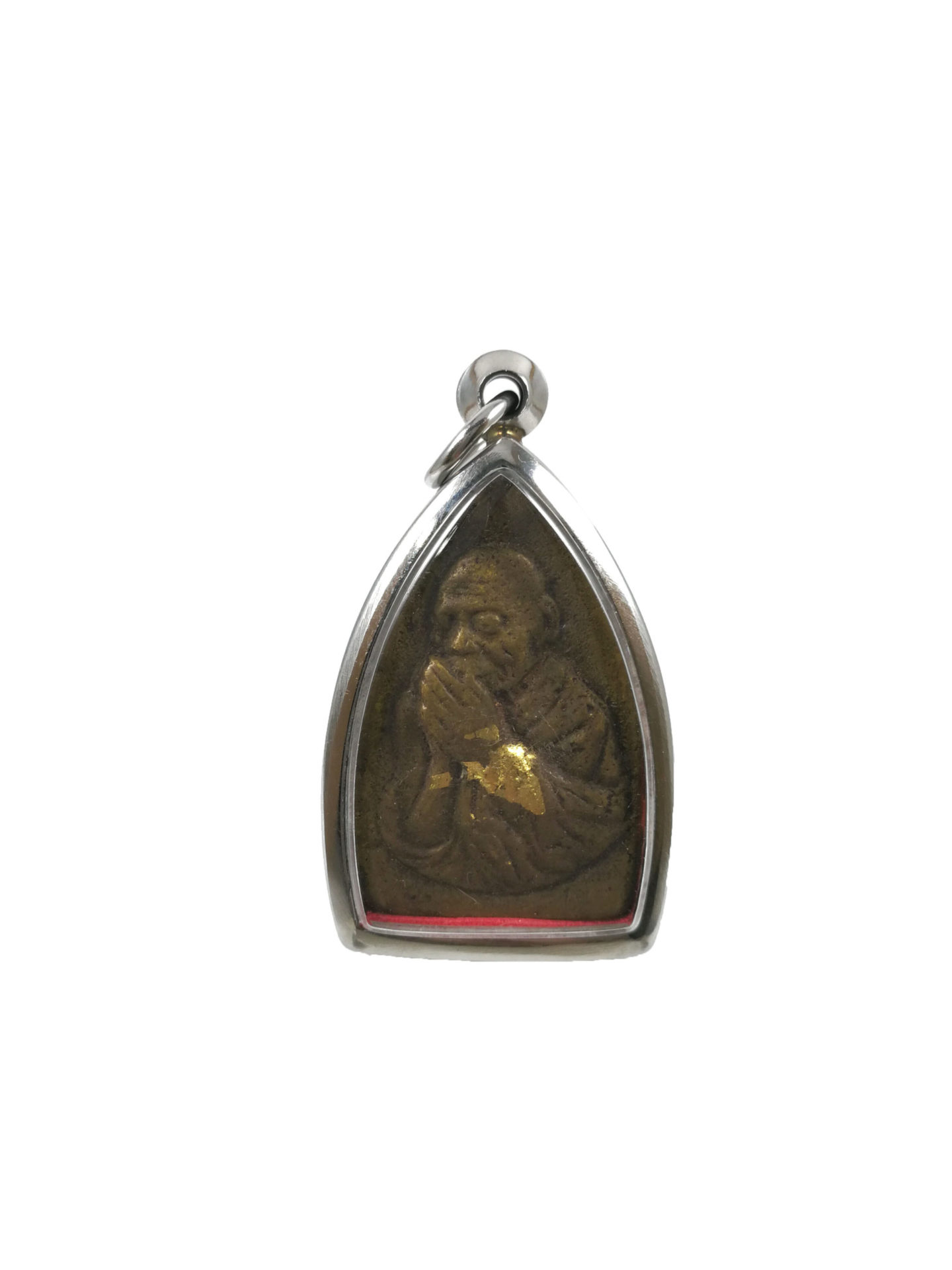

Description
Luang Phor Kai – The Golden Mouth Monk of Southern Thailand
Luang Phor Kai, also known as Luang Phor Klai or Phor Than Klai (A.D. 1876–1970), was one of the most respected Buddhist monks of southern Thailand. Closely associated with Wat Suan Khan and Wat Phra That Noi in Nakhon Si Thammarat Province, he remains an important figure in Thai Buddhist history and traditional amulet collecting.
Born in Nakhon Si Thammarat, Luang Phor Kai was widely known by the title Wajasit, commonly interpreted as the Golden Mouth Monk. This distinctive nickname originated from local traditions describing the significance of his words and predictions, which devotees believed frequently came true. His reputation became an enduring part of the religious folklore surrounding his life.
During his youth, Luang Phor Kai suffered a serious injury to his left foot following an accident involving a falling tree. The injury permanently affected his mobility, and accounts of his determination and perseverance became an important part of his biography.
Luang Phor Kai entered the Buddhist monastic tradition at a young age and dedicated his life to religious studies, meditation and the teachings of Buddhism. In B.E. 2448 (A.D. 1905), he became the abbot of Wat Suan Khan, where he served for many decades. He was also closely involved with Wat Phra That Noi, contributing to its development and religious significance. Beyond his monastic responsibilities, he was respected for his involvement in temple construction, community development and charitable activities.
Amulets associated with Luang Phor Kai include traditional portrait medallions, small cast representations and other commemorative designs. These pieces often feature his likeness, Thai inscriptions and decorative motifs reflecting the artistic traditions of southern Thailand. Their materials, designs and production methods vary according to the individual temple, edition and period of creation.
Following his passing in B.E. 2513 (A.D. 1970), Luang Phor Kai’s remains were enshrined at Wat Phra That Noi, which continues to be an important place of remembrance and devotion.
Today, Luang Phor Kai amulets remain highly regarded among Buddhist devotees and collectors for their historical associations, religious significance and distinctive Thai craftsmanship.


