
Description
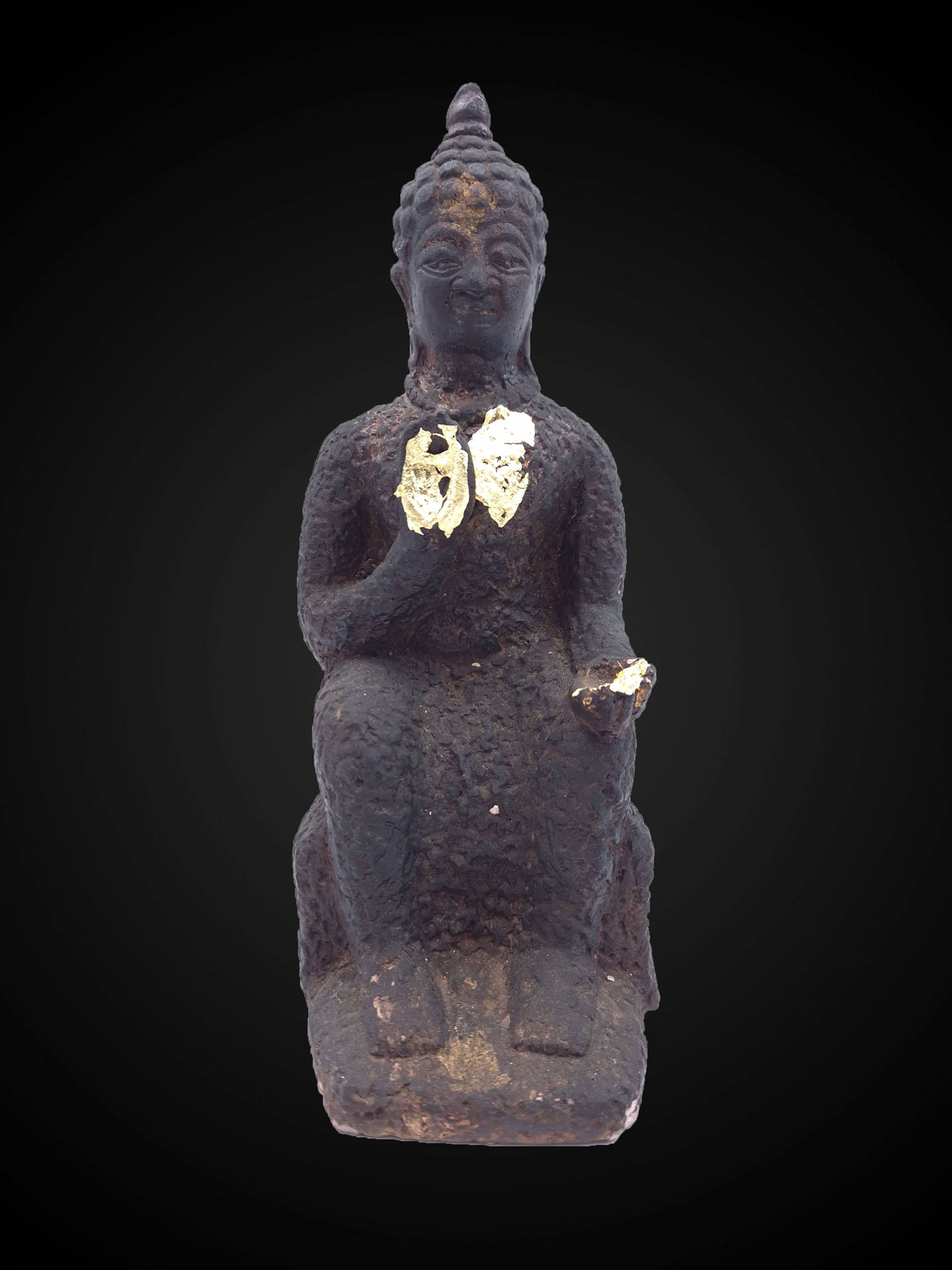
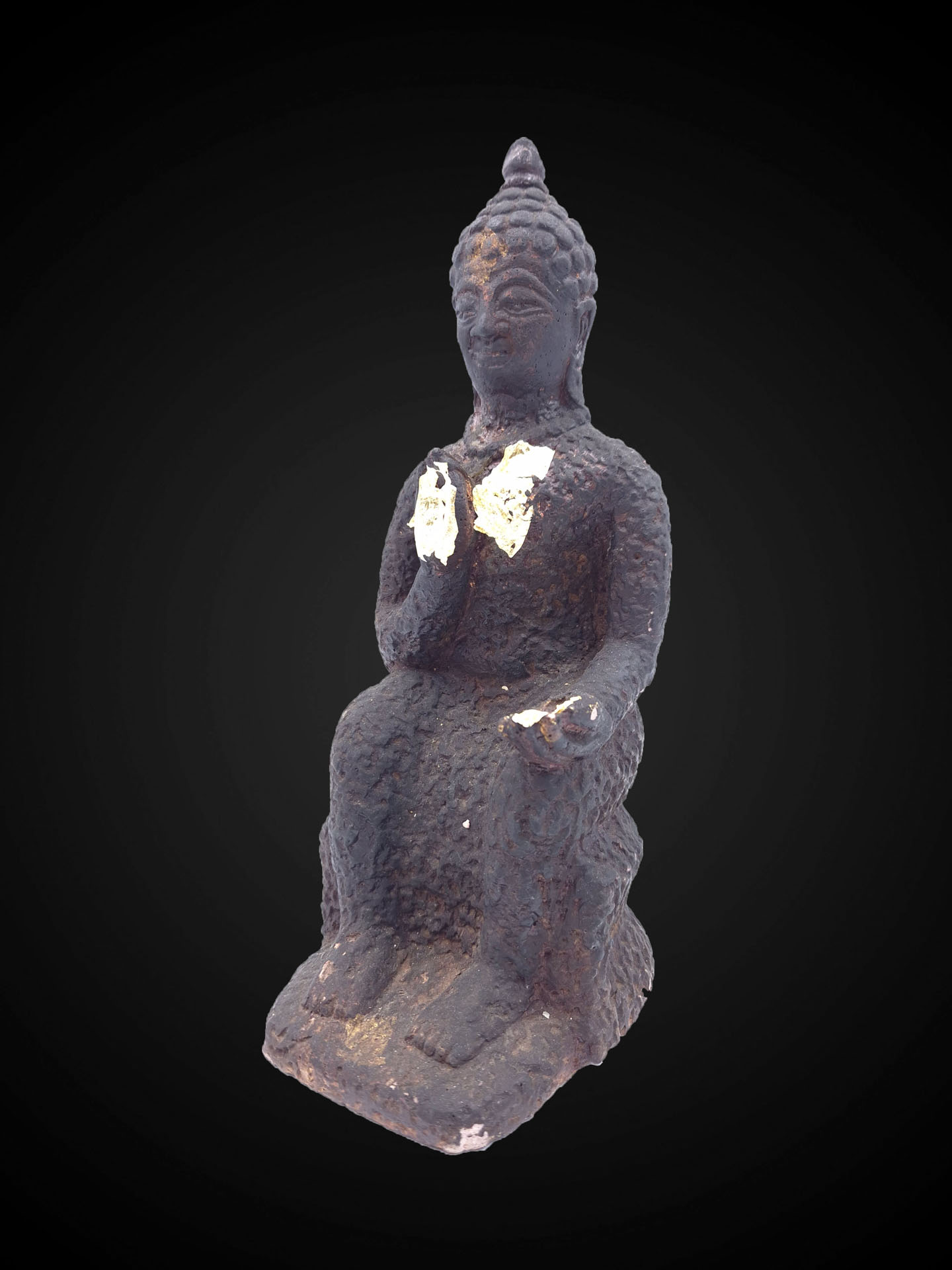
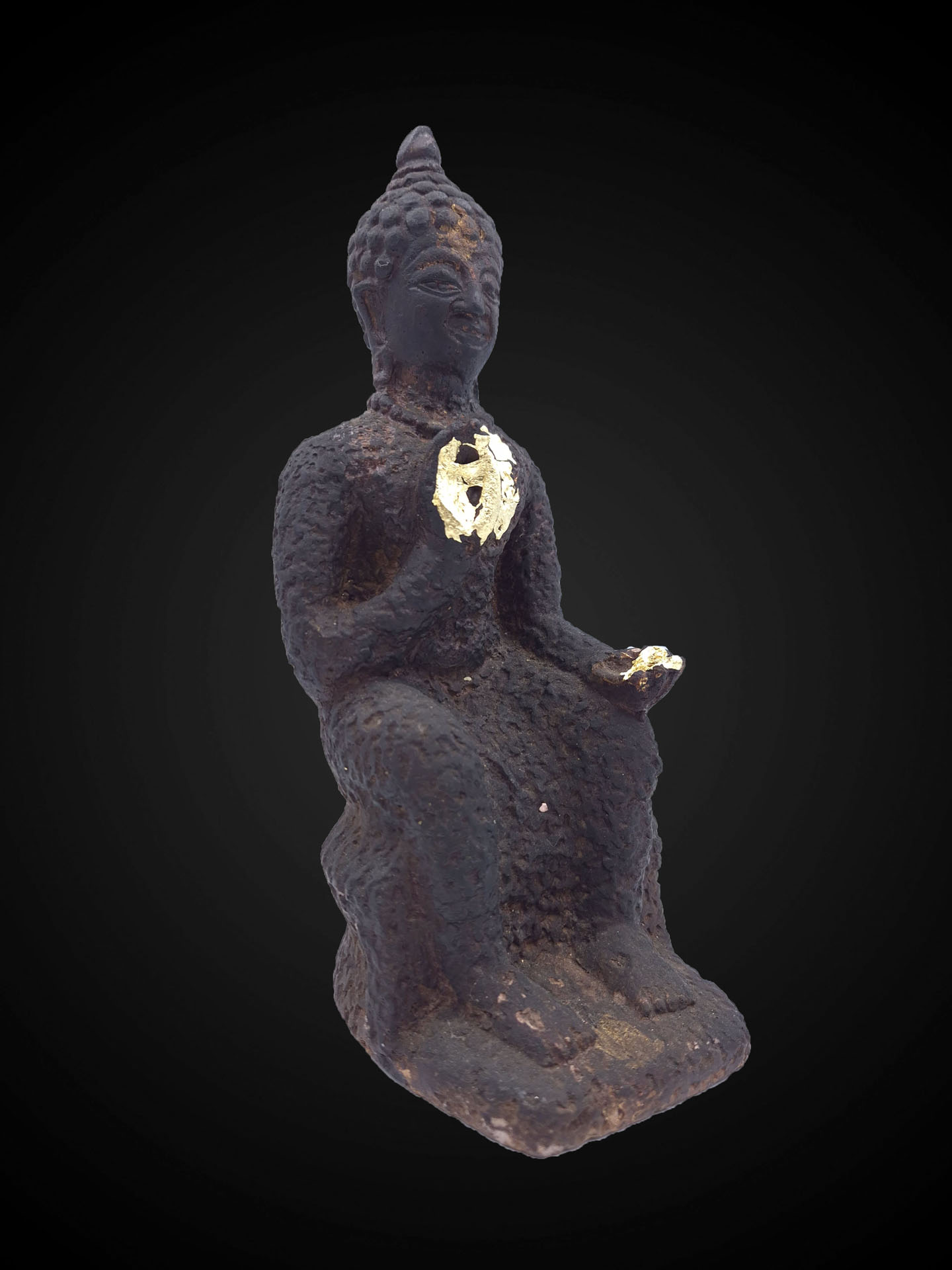
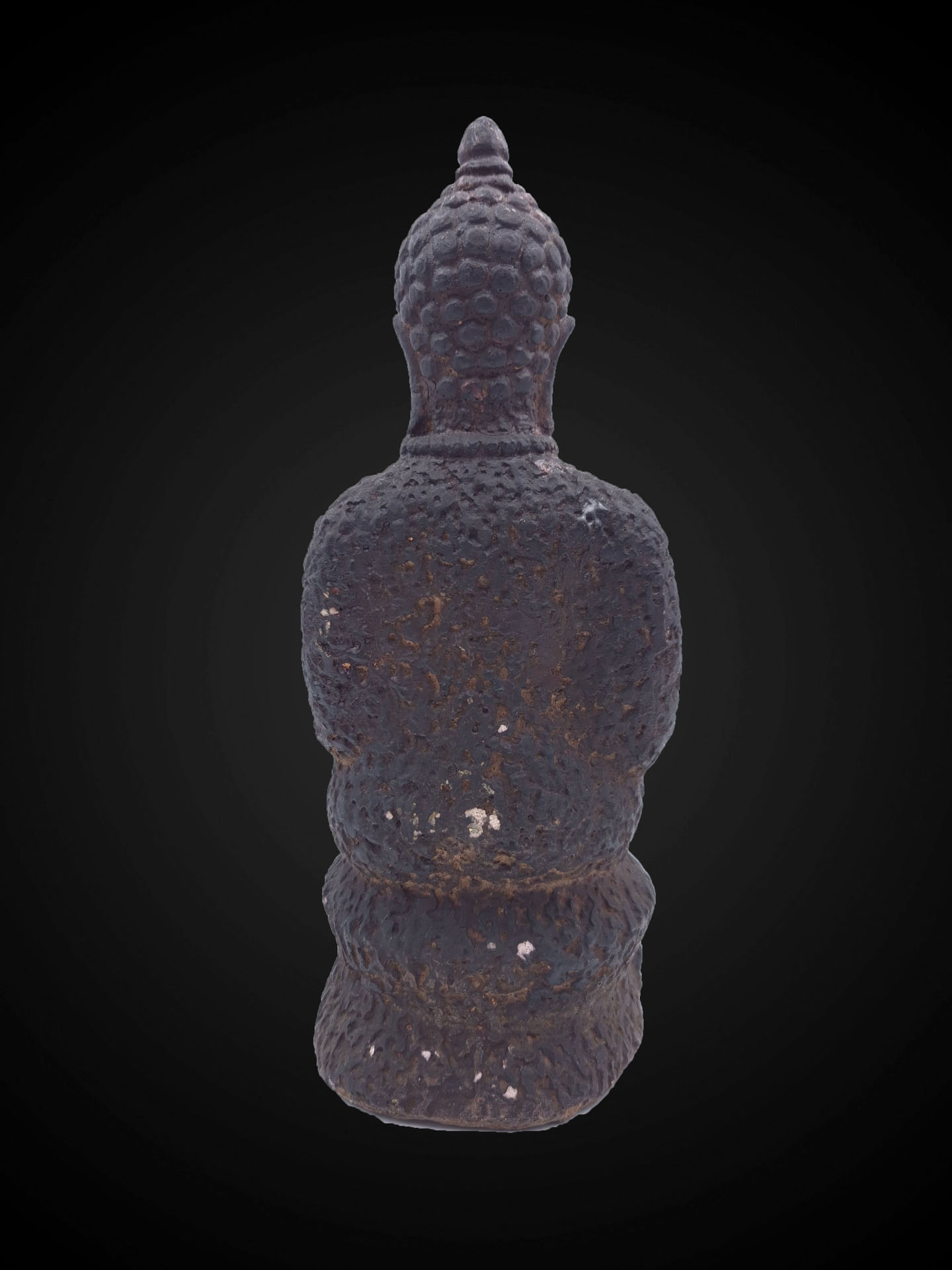
This Mon–Dvaravati style Buddha image is depicted seated in a devotional posture with one hand raised near the chest and the other resting open beside the body. The gesture conveys reassurance and teaching, expressing the Buddha’s role as a compassionate guide to enlightenment.
The sculpture reflects visual elements associated with the Dvaravati cultural sphere (c. 6th–11th century), a Mon Buddhist civilization that flourished in central Thailand and played a crucial role in the early spread of Theravada Buddhism across mainland Southeast Asia.
Distinctive stylistic characteristics include the rounded snail-shell hair curls, compact seated proportions, and broad symmetrical facial expression, all features commonly associated with Dvaravati Buddhist imagery. The figure’s simplified robe and solid torso emphasize serenity and spiritual stability rather than elaborate ornamentation.
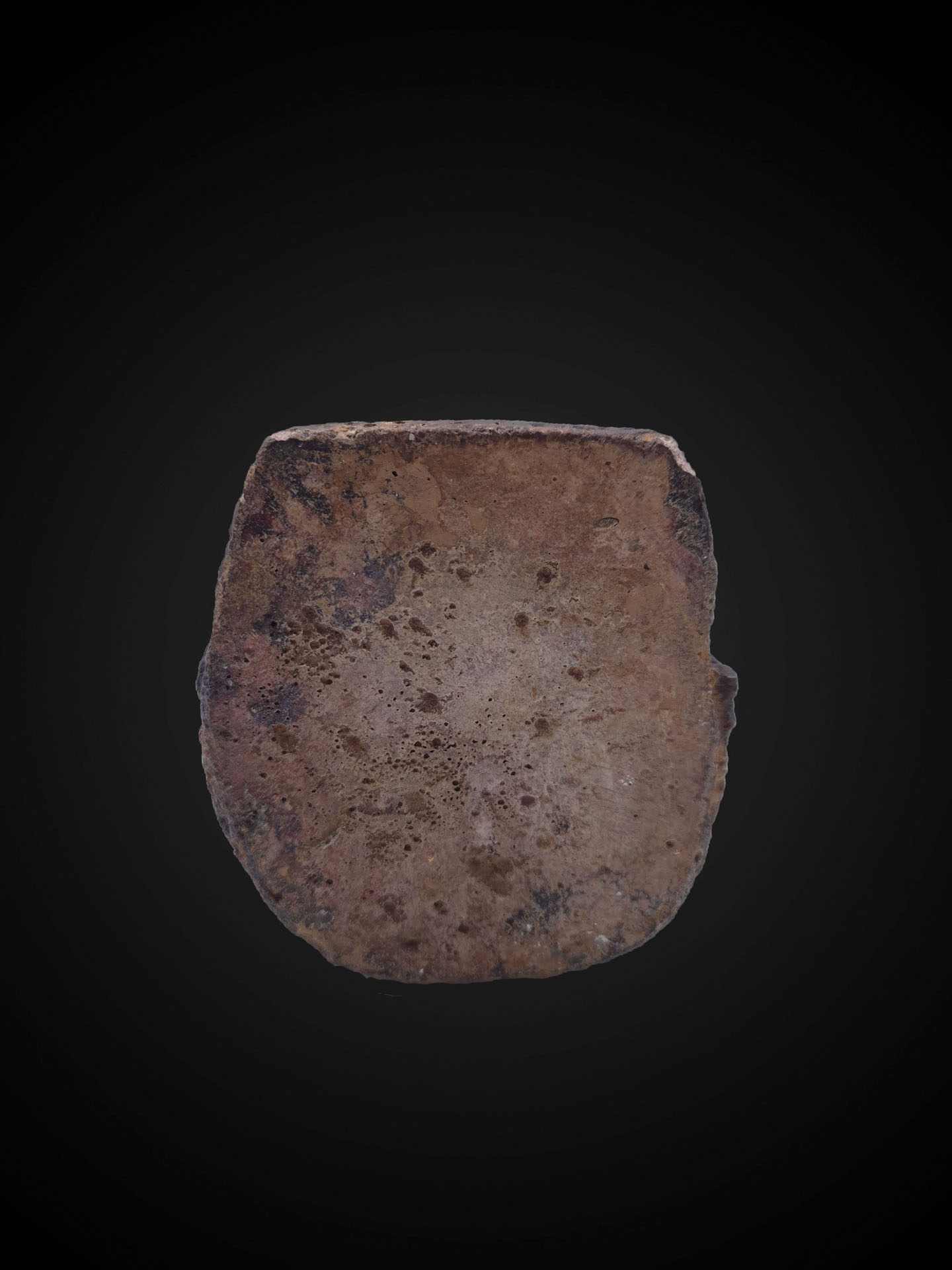
The statue is crafted from terracotta (fired clay), a material widely used for devotional Buddhist figures throughout Southeast Asia. Terracotta images were often produced for temples, shrines, and pilgrim offerings, making them an important part of regional Buddhist artistic traditions.
The surface shows a naturally aged earthen tone with traces of devotional gold leaf, applied by worshippers as an act of merit and reverence.
With its modest scale and grounded presence, the statue carries a quiet contemplative quality suitable for altar display, meditation spaces, or devotional collections.
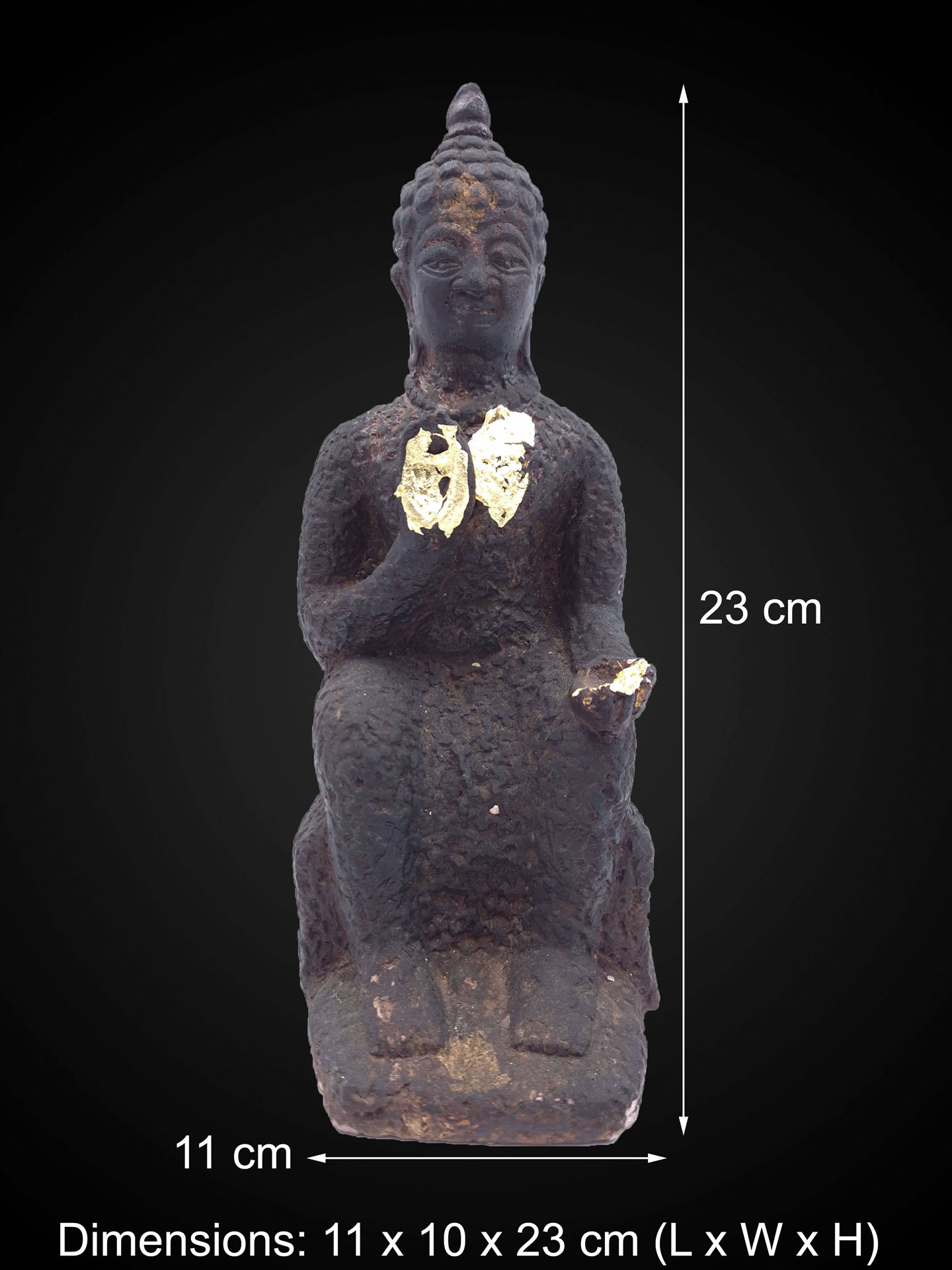
Dimensions: 11 × 10 × 23 cm (L × W × H)
Weight: 1.6 kg


